<?xml version="1.0" encoding="UTF-8"?>
<feed xmlns="http://www.w3.org/2005/Atom"  xmlns:media="http://search.yahoo.com/mrss/" xmlns:dc="http://purl.org/dc/elements/1.1/" xmlns:itunes="http://www.itunes.com/dtds/podcast-1.0.dtd" xmlns:geo="http://www.w3.org/2003/01/geo/wgs84_pos#" xmlns:georss="http://www.georss.org/georss" xmlns:photo="http://www.pheed.com/pheed/">
 <title>The Strategist</title>
 <subtitle><![CDATA[Daily news and analysis for corporate &amp; political leaders]]></subtitle>
 <link rel="alternate" type="text/html" href="https://www.wmaker.net/thestrategist" />
 <link rel="self" type="text/xml" href="https://www.wmaker.net/thestrategist/xml/atom.xml" />
 <id>https://www.wmaker.net/thestrategist/</id>
 <updated>2026-11-25T14:01:16+01:00</updated>
 <generator uri="http://www.wmaker.net">Webzine Maker</generator>
  <icon>https://www.wmaker.net/thestrategist/favicon.ico</icon>
  <logo>https://www.wmaker.net/thestrategist/var/style/logo.jpg?v=1426090212</logo>
  <entry>
   <title>Japan’s expeditionary force is growing… But is Japan prepared for what’s coming?</title>
   <updated>2015-12-15T19:20:00+01:00</updated>
   <id>https://www.wmaker.net/thestrategist/Japan-s-expeditionary-force-is-growing-But-is-Japan-prepared-for-what-s-coming_a1093.html</id>
   <category term="World &amp; Politics" />
   <photo:imgsrc>https://www.wmaker.net/thestrategist/photo/art/imagette/8663564-13672432.jpg</photo:imgsrc>
   <published>2015-12-14T08:12:00+01:00</published>
   <author><name>La Rédaction</name></author>
   <content type="html">
    <![CDATA[
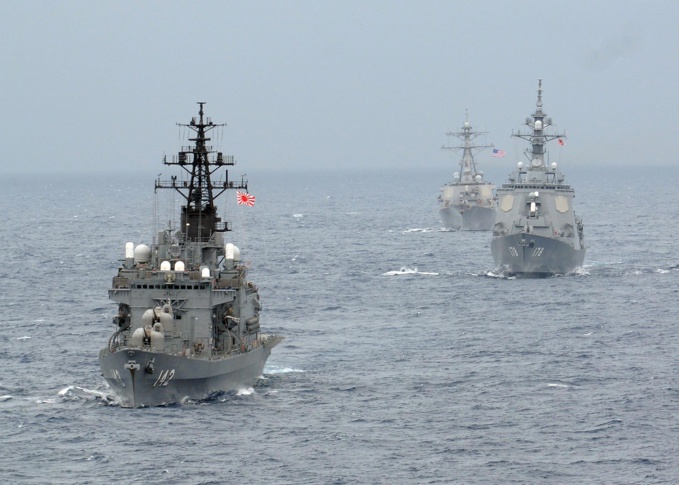
The Japanese Navy is expanding and becoming more modern at an extremely fast pace. Japan is acquiring new materials and training its troops like never before. The dispute with China over islands in the East China Sea is one of the main motivations for this renewal. Is Japan fully prepared?     <div style="position:relative; text-align : center; padding-bottom: 1em;">
      <img src="https://www.wmaker.net/thestrategist/photo/art/default/8663564-13672432.jpg?v=1450203573" alt="Japan’s expeditionary force is growing… But is Japan prepared for what’s coming?" title="Japan’s expeditionary force is growing… But is Japan prepared for what’s coming?" />
     </div>
     <div>
      Tensions are rising in the South China Sea, as China is reclaiming islands “<em>at a rapid pace</em>,’ according to Japanese Prime Minister Shinzo Abe. China has already built artificial islands and facilities in the disputed areas, provoking other claimants, including the Philippines and other Southeast Asian nations. In the past months and years Japan has been preparing its marine forces to face possible confrontations around these disputes. <br />  &nbsp; <br />  On March 25th this year, Japan’s Maritime Self-Defense Force (JMSDF) commissioned the JS Izumo (DDH-183), a helicopter destroyer, which principal task will be anti-submarine warfare and command and control operations to protect the Japanese territories in the East China Sea. The 248 meters long career is the largest surface combatant in the Japanese fleet and is designed to accommodate up to 14 helicopters, five of which can simultaneously take off and land given the large flight deck. The JS Izumo is a major acquisition that can be bad news for Chinese subs, considering its impressive size and capabilities. <em>‘This heightens our ability to deal with Chinese submarines that have become more difficult to detect,’</em> (2) stated a Japanese official from the JMSDF during the ceremony. <br />  &nbsp; <br />  The JS Izumo can also be used for humanitarian aid and disaster relief (HADR) operations. Japanese authorities have been looking to invest in ships that can offer this dual operability, as Japan has recently been in desperate need of carriers of immediate assistance to affected populations in case of disasters. <br />  &nbsp; <br />  Japan’s defense is therefore building up; the Minister of Defense has budgeted ¥23.97 trillion (US $199.5 billion) for the next five years to fund the military expansion and create ‘a more flexible dynamic Joint Defense Force’ ‘Japan’s focus has merged from aiming at deterring a Soviet invasion from the north to defending its southeastern island chain. Therefore, the main battle tank fleet should be cut from 740 to 300, and be replaced by the fleet with lighter maneuver combat vehicles. <br />  &nbsp; <br />  Adding amphibious landing vehicles is also a priority for Japan (52 AAV-7), as well as new aircrafts and helicopters. Full amphibious capabilities is something still being developed in Japanese marine forces. Having a full amphibious power has become essential for Japan in order to defend its islands and it can also be a great addition to disaster relief potentials. <br />  &nbsp; <br />  "<em>In the medium term [up until 2020] I think we will see some focus on enhancing Japan's amphibious capabilities. Japan has already made the first institutional moves to setting up a Japanese 'marines' in the form of the Amphibious Rapid Deployment Brigade, and is acquiring/looking to acquire Ospreys and AAVs,"</em> said Corey Wallace, a Japan security policy expert at New Zealand's University of Auckland (1). <br />  &nbsp; <br />  Grant Newsham, senior research fellow at the Japan Forum for Strategic Studies added that Japan is now in need of more amphibious ships, stating ‘<em>Japan needs to invest more in ship-to-shore connectors beyond the [air-cushioned landing craft] and the old-model AAVs currently being procured from the United States." </em>The offer for amphibious capable ships has improved these past years especially when looking for dual operability; military and assistance use. <br />  &nbsp; <br />  A new generation of fast landing craft that can be used for both military, humanitarian and civilian logistics operations was recently chosen by the French Navy for its abilities to accomplish amphibious operations in rough seas and shallow waters. The L-Cat is actually a landing catamaran, capable of high speeds of over 25 knots, depending on its load. Its draft is only of 1.7m (2.35 meters when loaded), which allows the craft made by French CNIM to dock in many different configurations. <br />  &nbsp; <br />  Amphibious ships are likely to be the last component to be acquired by the JMSDF, as Japan’s Prime Minister has expressed its worries over increasing pressure from Chinese fleet being positioned across the Japan Sea and the South China Sea. On the sidelines of the G-7 PM, Shinzo Abe expressed his inquietude to French President Francois Hollande and other allies from of the G-7. Abe also told Hollande the need for Japan to open a dialogue with Russian leaders to settle the long running sovereignty dispute over four Russian-held islands off Hokkaido. France and Japan should work together on this matter, as well as on climate change related issues in preparation of the COP21 conference, which will be hosted in Paris at the end of the year (3). <br />  &nbsp; <br />  More than ever, Japan is proving its military strength in the region. Being able to reply in a quick and efficient manner to Chinese claims of small pieces of land in the middle of the Sea, is crucial for Japan’s future and it should affect China’s long-term plans. If an open conflict was to happen in the region, Japan’s new expeditionary force, especially its amphibious power, will be determinant in the future of the islands of the Sea of Japan and the East China Sea. <br />  &nbsp; <br />  (1) Amphibious focus, Joint Strategy Drive Japan, Defense News, Paul Kallender-Umezu, June 9th 2015 <br />  (2) <em>Japan’s new helicopter carrier: Bad news for Chinese Subs?</em>, The Diplomat, Franz-Stefan Gady, March 28th 2015. <br />  (3) Japan, France wary of Beijing’s reclamation binge in South China Sea, Japan Times, June 7th 2015
     </div>
     <br style="clear:both;"/>
    ]]>
   </content>
   <link rel="alternate" href="https://www.wmaker.net/thestrategist/Japan-s-expeditionary-force-is-growing-But-is-Japan-prepared-for-what-s-coming_a1093.html" />
  </entry>
  <entry>
   <title>Middle East learns about waste management</title>
   <updated>2015-04-20T18:34:00+02:00</updated>
   <id>https://www.wmaker.net/thestrategist/Middle-East-learns-about-waste-management_a315.html</id>
   <category term="Markets &amp; Industries" />
   <photo:imgsrc>https://www.wmaker.net/thestrategist/photo/art/imagette/7701363-11914573.jpg</photo:imgsrc>
   <published>2015-04-20T17:51:00+02:00</published>
   <author><name>The Strategist</name></author>
   <content type="html">
    <![CDATA[
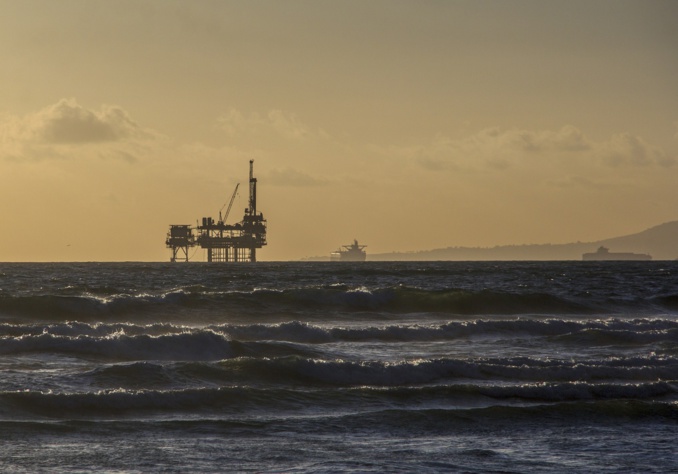
The Middle-East is ending its demographic transition. This means population will remain relatively stable from now on, but the transition has caused a dramatic increase in the people’s number. Developing industries have complicated the ecological situation further. Now that the region has flourished, comes the price-tag: dealing with the increased amount of waste, generated every day.     <div style="position:relative; text-align : center; padding-bottom: 1em;">
      <img src="https://www.wmaker.net/thestrategist/photo/art/default/7701363-11914573.jpg?v=1429545719" alt="Middle East learns about waste management" title="Middle East learns about waste management" />
     </div>
     <div>
      According to the Washington Post “Fifty years of rapid population growth in the Middle East is coming to an end. The Middle East is experiencing the same "demographic transition" to slow population growth that other areas have gone through.” The demographic transition is a process which all countries have either undergone, or will undergo at some point in time. The prior state is characterized by high fertility and high mortality. The post-transitional state also amounts to the same weak and regular increase, but on the basis of low fertility and low mortality. The transitional phase is primed by a sharp fall in mortality, followed by the same decrease in fertility. Because the two trends drop one after the other, and not simultaneously, it causes a sharp one-off increase in the population. While the Western world started transitioning in the early part of the 20<sup>th</sup> century, the Middle-East is only finishing now. So a large extra portion of waste-producers has just appeared. This adds to the sister problem: the growing industrialization. <br />  &nbsp; <br />  Not all countries in the Middle-East have chosen to diversify their economy out of the oil industry. Qatar has not deemed necessary to do so, given their population of under a million. But the oil industry itself is constantly growing, at the pace of new oil field discoveries. And many countries have chosen to diversify, with the perspective of oil and gas fields tapping out. <br />  &nbsp; <br />  This double shift has caused an increase in waste, both industrial and domestic. The riddle takes an extra-twist considering that part of diversification undertaken aims at developing the tourist industry, namely in Oman. Such developments can be hampered by poor waste management, as tourists tend to frown upon trash-littered landscapes and beaches. <br />  &nbsp; <br />  In order to quell this flow of waste, a large-scale upgrade of the waste treatment facilities is necessary. But it will need to fit in snugly in the region, which is already struggling with barely enough power and an arid environment. Traditional waste management methods (usually incineration) just won’t do for such large amounts of refuse in such conditions. Whichever solutions are retained, they will have to be top-notch. Western companies are therefore positioning themselves to place what they have best in shop. <br />  &nbsp; <br />  CNIM has swooped in as a solution-provider for specific environments and their domestic waste-management challenges, and seems to be in good position to fill the landscape with its high-tech eco-friendly machinery. The engineering firm struck gold by acquiring the daughter company LAB, S.A, specialized in flue gas treatment, enabling it to treat smoke from its facilities and releasing clean air into the atmosphere. By having particularly “clean” waste-management technologies, it is able to manage waste very close to where it is produced, which is to say within the urban areas, providing its networks with over-average efficiency. LAB S.A. has fitted its clean-smoke devices, which it has protected with over 50 patents, all over Western Europe, Americas and Asia. In its latest feat, CNIM and its subsidiary LAB SA provided the city of Baku, in Azerbaijan, a complete waste to energy solution, able to engulf over 60 tons of waste per hour, render power in exchange and filter its polluting particles. <br />  &nbsp; <br />  Shell bore that in mind with its latest gas-processing plant, Pearl GTL, which has been designed in order to meet zero-waste standards. National governments have become aware of the environmental situation and are therefore requesting industries to limit the additional burden on the waste situation. The latest gas facility was therefore fitted with all kinds of additional devices, at great expense, to ensure that the ecological situation did not further degrade. One of the standards it was held to, for instance, was the Zero Liquid Discharge threshold. The arid environment makes for extreme water scarcity, which means that the slightest amount of liquid pollution – and a plant the size of Pearl GTL could, if improperly designed, generate large amounts – would cause comparatively great environmental damage. Every single aspect of the liquid waste circuit, from constant descaling to cleansed vapors, is therefore strictly monitored and reinforced. <br />  &nbsp; <br />  These industrial endeavors don’t pop out of nowhere: they are business consequences of the political engagements and commitments by national leaders in the area. In 2014, Ali Al Naimi, the Saudi Oil minister, stated the outstanding objective of almost a million tons fewer per year in CO2 production. To that effect, he entrusted KACARE and Saudi Aramco with the task of development new non-fossil energy systems. <br />  &nbsp; <br />  The neighboring United Arab Emirates have undertaken championship of the environmental cause. Chief officer Al Huraimel took his position, claiming “Since its founding, Bee’ah has adopted a truly collaborative approach to resolving future energy crises and advancing its journey towards achieving zero-waste to landfill in Sharjah. This visit proved to be immensely successful – it opened new doors for joint ventures and allowed the delegates to delve deep into Bee’ah’s multi-phased waste management strategy. More importantly, it helped us to further cement our shared vision for a sustainable future.” Given how closely-knit the entire area is, political competition is fierce, and all countries keep angling to get some light shed onto them, hence the large public focus which has been given to the Bee’ah. In addition, the UAE has launched the great Masdar city project, a newly-engineered town designed to be the most ecologically advanced urban area in the world. <br />  &nbsp; <br />  With the recent demographic, industrial and political changes in the region, Oman is discovering what challenge lies ahead, if only through the efforts its neighbors are deploying to regulate waste management efficiently. Keeping the kingdom in shape will not be a breeze, but there are several lights at the end of the tunnel. First of all, solutions do exist, in the West. Second, Oman has more than the means necessary to acquire state-of-the-art technology. Finally, the general awareness-raising in the entire Middle-East are means that skills will multiply. A booming business is usually quickly followed by universities setting up college degrees in that given area. For the moment, the Middle-East must rely on Western technology to get things started. But that might change, maybe in a decade or two.
     </div>
     <br style="clear:both;"/>
    ]]>
   </content>
   <link rel="alternate" href="https://www.wmaker.net/thestrategist/Middle-East-learns-about-waste-management_a315.html" />
  </entry>
</feed>