<?xml version="1.0" encoding="UTF-8"?>
<feed xmlns="http://www.w3.org/2005/Atom"  xmlns:media="http://search.yahoo.com/mrss/" xmlns:dc="http://purl.org/dc/elements/1.1/" xmlns:itunes="http://www.itunes.com/dtds/podcast-1.0.dtd" xmlns:geo="http://www.w3.org/2003/01/geo/wgs84_pos#" xmlns:georss="http://www.georss.org/georss" xmlns:photo="http://www.pheed.com/pheed/">
 <title>The Strategist</title>
 <subtitle><![CDATA[Daily news and analysis for corporate &amp; political leaders]]></subtitle>
 <link rel="alternate" type="text/html" href="https://www.wmaker.net/thestrategist" />
 <link rel="self" type="text/xml" href="https://www.wmaker.net/thestrategist/xml/atom.xml" />
 <id>https://www.wmaker.net/thestrategist/</id>
 <updated>2026-11-25T13:51:05+01:00</updated>
 <generator uri="http://www.wmaker.net">Webzine Maker</generator>
  <icon>https://www.wmaker.net/thestrategist/favicon.ico</icon>
  <logo>https://www.wmaker.net/thestrategist/var/style/logo.jpg?v=1426090212</logo>
  <entry>
   <title>Dale’s ‘Poeple Over Profit’ Redefines The Relation Between ‘Personal’ &amp; ‘Business’</title>
   <updated>2015-05-28T07:39:00+02:00</updated>
   <id>https://www.wmaker.net/thestrategist/Dale-s-Poeple-Over-Profit-Redefines-The-Relation-Between-Personal-Business_a495.html</id>
   <category term="Companies &amp; CEOs" />
   <photo:imgsrc>https://www.wmaker.net/thestrategist/photo/art/imagette/7840466-12164383.jpg</photo:imgsrc>
   <published>2015-05-28T07:36:00+02:00</published>
   <author><name>The Strategist</name></author>
   <content type="html">
    <![CDATA[
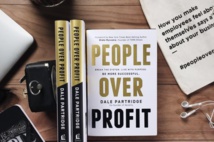
Though controversial in nature, Dale’s “People Over Profit” imparts a strong message, wherein the author believes that “Generosity must be built in, not tacked on.”     <div style="position:relative; float:left; padding-right: 1ex;">
      <img src="https://www.wmaker.net/thestrategist/photo/art/default/7840466-12164383.jpg?v=1432791588" alt="Dale’s ‘Poeple Over Profit’ Redefines The Relation Between ‘Personal’ &amp; ‘Business’" title="Dale’s ‘Poeple Over Profit’ Redefines The Relation Between ‘Personal’ &amp; ‘Business’" />
     </div>
     <div>
      <div style="text-align: justify;">Thestrategist.media – 14 May 2015 – Evan Kirkpatrick, a contributor of Forbes, talks about a “serial entrepreneur”, Dale Partdge’s visions which he penned down in his newly published book titled: “People Over Profit”, wherein the author gives a new perspective to an old idea: “It’s not personal; it’s just business.” <br />  &nbsp; <br />  The phrase is familiar in the business world; as a result the same remains “ingrained” into the mindset of business associates, yet Patridge questions that:</div>    <blockquote>  <div style="text-align: justify;">“Ask yourself, what are you doing simply because of tradition?”</div>  </blockquote>    <div style="text-align: justify;">&nbsp; <br />  While, Kirkpatrick heralds the book “People Over Profit” as “the playbook from a successful entrepreneur” which journeying through the author’s “radical business philosophy” contests “capitalistic norms”. It also reflects the trying times an entrepreneur undergoes while “trying to build something remarkable” including the deprivation of sleep, the emotional tiredness, and other such deep “trenches”. &nbsp; <br />  &nbsp; <br />  Though not an “ideal manifesto”, yet the said book provides a “well researched” perspective, a unique one indeed that can only come from an experienced person who has successfully “built something exceptional”. In fact, the company, named Sevenly, which was founded by Patridge, “donate” $7 on every single item purchased to a wide range of social “worthy causes”. Likewise, Sevenly has, so far, contributed an approximate sum of $ 4.2 Million from its revenue that amounts to “over $25 million”. <br />  &nbsp; <br />  Interestingly, the said book introduces a “twist” whereby it recounts the period of the author’s life when he actually got “fired from the company”. This particular feature distinguishes it from any other books on the insights of a company’s founder. However, the question to ponder over is on what basis did the founder of the company get fired. In fact, in similar tone Kirkpatrick echoes:</div>    <blockquote>  <div style="text-align: justify;">“Fired? For building a company up to nearly 50 employees, donating millions to charity, and building a brand consumers love and a place employees love to work?”</div>  </blockquote>    <div style="text-align: justify;">&nbsp; <br />  As luck would have it, the founder of Sevenly was “fired from his own company”, the details of which has been “transparently” noted down in the pages of “People Over Profit”. Dale praises Sevenly in his book, wherein he constructs his thoughts by “weaving in examples of things” he did along with the staff of Sevenly in order to establish an in-house culture of generosity which would complement the company’s outward kind act of “donations”. <br />  &nbsp; <br />  Kirkpatrick praises Dales selection of companies such as Ford, Google and McDonald to illustrate the concept of “The 4 Eras Of Organizational Behavior” wherein Dale stresses on the point that under the pressure of the shareholder for growing performances, often companies compromise on their “good intentions” with which they had begun. <br />  &nbsp; <br />  Kirkpatrick writes that Dale’s reason behind writing the book was that he did not want the past patterns “to dictate the future of capitalism”. Unlike many “business leaders” of today, Dale fearlessly states the truth behind company policies that he feels should undergo change. Furthermore, he adds:</div>    <blockquote>  <div style="text-align: justify;">“When did we decide to separate business and personal?... Companies have to have security escort employees out of the building because of the way they fire people”.</div>  </blockquote>    <div style="text-align: justify;">&nbsp; <br />  In Dale’s view the futuristic C.E.O or the ‘next generation of C.E.O’s’ could profit from the book wherein it instructs on:</div>    <blockquote>  <div style="text-align: justify;">“... being a more mature leader. For example, how about adding the 7 key metrics from the book as a culture or leadership dashboard... How much more money is the company making because people are happy and transparent? What has that done to sales and conversions? That’s the next generation of CEO’s...&nbsp; It’s impressive when people can generate wealth and be loved by the people around them.”</div>  </blockquote>    <div style="text-align: justify;"> <br />   <br />   <br />   <br />   <br />  <strong>References:</strong> <br />  <a class="link" href="http://www.forbes.com/sites/evankirkpatrick/2015/05/08/entrepreneur-dale-partridge-launches-controversial-book-about-socially-focused-business/">http://www.forbes.com/sites/evankirkpatrick/2015/05/08/entrepreneur-dale-partridge-launches-controversial-book-about-socially-focused-business/</a> </div>  
     </div>
     <br style="clear:both;"/>
    ]]>
   </content>
   <link rel="alternate" href="https://www.wmaker.net/thestrategist/Dale-s-Poeple-Over-Profit-Redefines-The-Relation-Between-Personal-Business_a495.html" />
  </entry>
  <entry>
   <title>Strategy And Operation Should Go Hand In Hand</title>
   <updated>2015-04-14T13:19:00+02:00</updated>
   <id>https://www.wmaker.net/thestrategist/Strategy-And-Operation-Should-Go-Hand-In-Hand_a276.html</id>
   <category term="Management &amp; Strategy" />
   <photo:imgsrc>https://www.wmaker.net/thestrategist/photo/art/imagette/7677582-11871766.jpg</photo:imgsrc>
   <published>2015-04-14T13:18:00+02:00</published>
   <author><name>The Strategist</name></author>
   <content type="html">
    <![CDATA[
Greg Weismantel says most companies overlook the role of strategic functioning in the business world. According to him, without the incorporation of strategic vision and operational management even any successful company would also perish someday.     <div style="position:relative; float:left; padding-right: 1ex;">
      <img src="https://www.wmaker.net/thestrategist/photo/art/default/7677582-11871766.jpg?v=1429010364" alt="Strategy And Operation Should Go Hand In Hand" title="Strategy And Operation Should Go Hand In Hand" />
     </div>
     <div>
      <div style="text-align: justify;">Thestrategist.media – 13 April 2015 – The accountingToday talks about clubbing operational aspects with the strategic angle in a business firm. <br />  &nbsp; <br />  The C.E.O. of the “Epic Group”, Mr. Greg Weismantel, writes about the importance of applying a “tree-year” strategic management plan at the outset which is often overlooked as the focus shifts to the operational aspects of an institution. The Epic Group is a consulting firm that advises on strategic management to small to large sized companies and firms. The strength of the said firm lies in analysing and dissecting the strategy of other companies so as to support an emerging business. <br />  &nbsp; <br />  As mentioned above most companies get carried away with their operational features and consequently fail to benefit from the combined strength of strategic and operational facets.&nbsp; As per popular belief “strategic management is not necessary to have a successful company” and one would think most of the successful ones don’t have any such managerial strategy in place. <br />  &nbsp; <br />  Nevertheless, according to Greg Weismantel, his experience has been quite the different. He says combining “strategy with operations” has been always successful for any C.E.O.s who applied it. In fact, it also creates a positive vibrancy and exciting work atmosphere as along with the constant competitive market survey, through the “game-changing events”, which will have a business, the companies themselves have to change and adapt to suit the market. <br />  &nbsp; <br />  As a strategic move it is best to start combining strategy and operational aspects in the early days of the company which leaves it with the scope of maximum growth period, which needs to be maintained healthily till “the Maturing quadrant”. <br />  &nbsp; <br />  The C.E.O.s should be able to “reinventing itself” as the company reaches its “Maturing quadrants” which will prevent the company from ageing and eventually perishing from the face of time. No doubt. It is a challenging feat for the executive figures therefore involves much time and strategies. <br />  &nbsp; <br />  There are ample examples of successful companies who failed suddenly like Radio Shack, Eastman Kodak, Arthur Andersen, and Blockbuster. Weismantel points out that Eastman Kodak at some point of time used to hold ninety percent of market share in “the cellulose film market segment of photography”. The company began its career, namely in its “Emerging quadrant”, with the invention of “rolled paper film” by George Eastman. The said technology was used by the company way before any camera began to utilise “rolled paper films”. <br />  &nbsp; <br />  Moreover, the company continued its growing pattern throughout its “Growth quadrant” by expanding its productions to keep it always number one, so that almost all camera manufacturers in a worldwide scale turned to the specifications of films set by Kodak. As it became a mature and established company as a ninety percent market shareholder, it failed to keep up with the changing trend of digital photography as no such strategic actions were taken to keep the dying culture alive. Consequently, by 2012 Kodak withered away. <br />  &nbsp; <br />  Similar accounts in history show that operational management without any strategic vision doesn’t allow any firm to be aware of any competitive changing market trend and to take measures to always maintain the company at par. <br />   <br />   <br />   <br />   <br />  <strong>References:</strong> <br />  <a class="link" href="http://www.accountingtoday.com/news/firm-profession/combining-strategic-and-operational-management-at-your-firm-74230-1.html">http://www.accountingtoday.com/news/firm-profession/combining-strategic-and-operational-management-at-your-firm-74230-1.html</a>  <br />  &nbsp;</div>  
     </div>
     <br style="clear:both;"/>
    ]]>
   </content>
   <link rel="alternate" href="https://www.wmaker.net/thestrategist/Strategy-And-Operation-Should-Go-Hand-In-Hand_a276.html" />
  </entry>
</feed>