<?xml version="1.0" encoding="UTF-8"?>
<feed xmlns="http://www.w3.org/2005/Atom"  xmlns:media="http://search.yahoo.com/mrss/" xmlns:dc="http://purl.org/dc/elements/1.1/" xmlns:itunes="http://www.itunes.com/dtds/podcast-1.0.dtd" xmlns:geo="http://www.w3.org/2003/01/geo/wgs84_pos#" xmlns:georss="http://www.georss.org/georss" xmlns:photo="http://www.pheed.com/pheed/">
 <title>The Strategist</title>
 <subtitle><![CDATA[Daily news and analysis for corporate &amp; political leaders]]></subtitle>
 <link rel="alternate" type="text/html" href="https://www.wmaker.net/thestrategist" />
 <link rel="self" type="text/xml" href="https://www.wmaker.net/thestrategist/xml/atom.xml" />
 <id>https://www.wmaker.net/thestrategist/</id>
 <updated>2026-11-25T14:00:44+01:00</updated>
 <generator uri="http://www.wmaker.net">Webzine Maker</generator>
  <icon>https://www.wmaker.net/thestrategist/favicon.ico</icon>
  <logo>https://www.wmaker.net/thestrategist/var/style/logo.jpg?v=1426090212</logo>
  <entry>
   <title>Dutch submarine deal: understanding the underpinnings of the equation</title>
   <updated>2018-10-03T10:25:00+02:00</updated>
   <id>https://www.wmaker.net/thestrategist/Dutch-submarine-deal-understanding-the-underpinnings-of-the-equation_a3219.html</id>
   <category term="World &amp; Politics" />
   <photo:imgsrc>https://www.wmaker.net/thestrategist/photo/art/imagette/26109107-27008774.jpg</photo:imgsrc>
   <published>2018-10-03T10:21:00+02:00</published>
   <author><name>La Rédaction</name></author>
   <content type="html">
    <![CDATA[
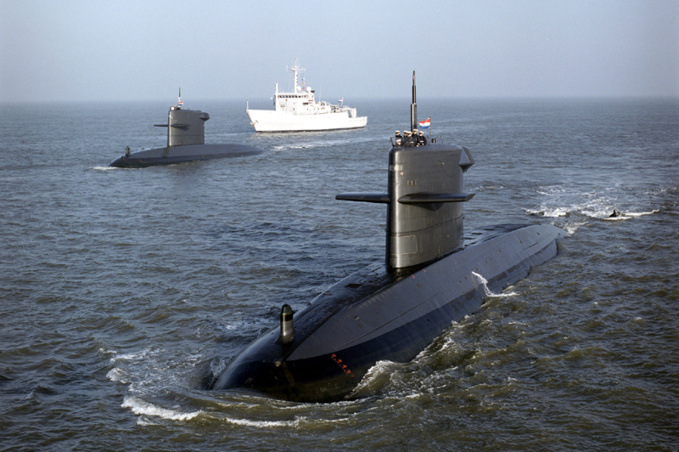
In the coming years, the Netherlands is due to replace its fleet of four submarines, which has served its time. Despite the relatively small fleet, it will represent a strategic investment for The Hague, which will take the time to choose wisely. What ambitions lie behind the deal, and what is the new fleet meant to accomplish?     <div style="position:relative; text-align : center; padding-bottom: 1em;">
      <img src="https://www.wmaker.net/thestrategist/photo/art/default/26109107-27008774.jpg?v=1538556007" alt="Dutch submarine deal: understanding the underpinnings of the equation" title="Dutch submarine deal: understanding the underpinnings of the equation" />
     </div>
     <div>
      The current Dutch submarine fleet is composed of four <u><a class="link" href="http://www.thedrive.com/the-war-zone/21662/swedens-notorious-little-carrier-killing-sub-just-got-some-major-upgrades">Walrus-class ships</a>  </u>. Home-built in the late 1970s, it proved an efficient and reliable, while basic design, with a solid operational history. As a diesel-electric sub, it represents the traditional technology, as the Netherlands never made the choice to go nuclear. Given that the Dutch are original founders of, and well-integrated into, the Atlantic Alliance, the submarine fleet was never meant as a national defence layer, but more as the Netherland’s contribution to NATO’s defensive surveillance of Europe, and that it did well. NATO <u><a class="link" href="https://www.nato.int/cps/en/natohq/news_142255.htm">reported </a>  </u>last year that: “<em>Dutch scientists and experts offered their insights on new ways to address emerging security challenges during a Science for Peace and Security Programme (SPS) Information Day held in The Hague on 15 March 2017. Fruitful cooperation between the Netherlands and NATO’s SPS Programme has already led to exploring common solutions to security challenges in the areas of cyber defense, terrorism, extremism and unexploded ordnance</em>.” Despite their small number and old age, Dutch subs have cut out a reputation throughout the alliance of reliability, and their officers are known for their advanced skills in operating them. Due to its flawless operational attendance and results, the Dutch have carved themselves a sweet spot within NATO, on the submarine front. But after 40 years of operations, replacement day has come for the old Walrus. <br />  &nbsp; <br />  The strategic situation for the Netherlands was, at the time of the launching of the Walrus-class submarines, rather similar to what it is now, with a mid-intensity threat coming from the East and from the northern seas. By the time the 1980s unfolded, Russia was in no condition to represent a serious military threat anymore, but could still hold its ground in Europe, wield considerable influence, and play on the European chess board against the alliance. One of the peacetime pre-conflictual levels is submarine intelligence, gathering data on traffic, ship position, convoy directions, not to mention the liability to lie in wait and strike, if need be. The Dutch submarines proved particularly effective in stealth and detection, during those days. During the 1990s, the collapse on the Soviet Empire, the world’s security hot points moved South, towards the Middle East, and the only tension areas in the East, with instability and fragmentation in the Balkans, involved little or no naval forces. Dutch submarines, like their foreign counterparts, were mainly sent on patrols. <br />  &nbsp; <br />  But<u><a class="link" href="http://www.businessinsider.fr/us/us-navy-requests-more-sonobuoys-amid-concerns-about-russian-subs-2018-7"> Russia is back in the game</a>  </u>, with a huge military build-up, including on the naval front. Once again, NATO will need an effective ally to counter the Russians on the underwater European chessboard, and the Netherlands are keen to get back to the game they were so good at. The Dutch navy scored a peacetime victory in 2011, when it was able to <u><a class="link" href="https://www.ibtimes.co.uk/russian-ministry-defence-claims-its-ships-chased-away-dutch-sub-mediterranean-1590767">sneak up on Russia’s only aircraft carrier</a>  </u> during an exercise, well within firing range. Had the same situation occurred in wartime, the Dutch would have sunk the only aircraft carrier the Russians have, dealing them a war-ending blow. But with the new Russian submarine capabilities, the old Walrus just won’t be up to the new task. Given the small size of the projected fleet, the new units will need to be as multi-role as possible, able to carry out missions ranging from hunting to intelligence gathering, and from special forces deployment to coastal defense. With the Netherland’s commitment both to NATO and to the UE, operational ranges will need to be far-reaching, so as to allow for missions within territorial waters as well as across the globe. The Dutch government is fully aware of this, as <u><a href="https://www.bndestem.nl/politiek/we-gaan-niet-oplappen-we-gaan-vernieuwen~a2327cae/">reported </a></u>by BN DeStem Hanneke Keultjes: “<em>Yes, we have really chosen things, because they are badly needed and the NATO attaches to them for example. New manned submarines that can gather intelligence close to the coast and in deep waters. There are not many countries that can. The air force and the army also benefit from that information. That is necessary for everyone</em>”. The replacement ships should arrive during the 2020s. <br />  &nbsp; <br />  One of the main criteria for submarines lies in their propulsion system and its ability to provide stealth and range. Nuclear propulsion gives the best performances on those fields. But the Netherlands don’t seem keen to jump the gap into the world of nuclear submarines, whose maintenance needs are far greater. Classic propeller submarines cause highly detectable noise by cavitation, and diesel electrics need to resurface regularly to recharge batteries, making them vulnerable to both surface ships and reconnaissance planes. The Netherlands will probably be turning to submarines equipped with Air-independent propulsion system (AIP) to match their abilities to the Russian ones in the near future. In any event, The Hague’s new strategic layout will demand a leap so great it is virtually bound to look abroad for help on the new submarine project. While domestic industries are excellent, the input of neighboring countries will prove necessary to avoid the program stalling. While the domestic-built Walrus made sense at the time, and served their purpose well, they did come at the cost of budget overshot, and foreign partnerships and expertise will address that risk. The Hague will therefore need to resort to European technological partners, while giving its national industry a large share of the contract. <br />  &nbsp; <br />  The best way, according to strategists, to avoid war, is to prepare it. To convince the enemy that any warlike move it could pull would result in immediate demise. Submarines, in this respect, are excellent war-preventers. If Russians find themselves unable to roam Europeans freely, without being detected and monitored by Dutch subs, then the Netherlands will have done much to consolidate the balance of European powers, further securing the country.
     </div>
     <br style="clear:both;"/>
    ]]>
   </content>
   <link rel="alternate" href="https://www.wmaker.net/thestrategist/Dutch-submarine-deal-understanding-the-underpinnings-of-the-equation_a3219.html" />
  </entry>
  <entry>
   <title>Turkey and the U.S aim for creating a zone free of Islamic State fighters</title>
   <updated>2015-07-28T12:34:00+02:00</updated>
   <id>https://www.wmaker.net/thestrategist/Turkey-and-the-U-S-aim-for-creating-a-zone-free-of-Islamic-State-fighters_a775.html</id>
   <category term="World &amp; Politics" />
   <photo:imgsrc>https://www.wmaker.net/thestrategist/photo/art/imagette/8074056-12582481.jpg</photo:imgsrc>
   <published>2015-07-28T12:32:00+02:00</published>
   <author><name>The Strategist</name></author>
   <content type="html">
    <![CDATA[
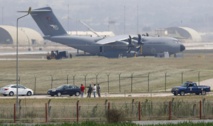
Turkey, a NATO member, has finally seen the light of the day and has agreed to join the U.S led coalition against terrorist organisations. However, the dynamics of the situation is complex with each player having its own agenda.     <div style="position:relative; float:left; padding-right: 1ex;">
      <img src="https://www.wmaker.net/thestrategist/photo/art/default/8074056-12582481.jpg?v=1438079676" alt="Turkey and the U.S aim for creating a zone free of Islamic State fighters" title="Turkey and the U.S aim for creating a zone free of Islamic State fighters" />
     </div>
     <div>
      <div style="text-align: justify;">The United States and Turkey have joined forces to provide a strategic air cover for Syrian rebels who are fighting to keep those loose bandits of the Islamic State at bay from a strip of land bordering Turkey. This will not only bolster security for NATO members but also provide a safe haven for civilians in that area. <br />  &nbsp; <br />  Despite the barbarity the Islamic State has let loose, Turkey has been so far obstinate in joining the fight against this evil until now. Last week, it made a dramatic turnaround and has granted the coalition, led by the United States, access to its bases. It has also allowed the alliance to bombard targets in Syria which have been intrinsically linked to the jihadists. <br />  &nbsp; <br />  One of the reasons for its obstinacy to join the alliance has been its burden of sheltering 1.8 million Syrian refugees. It has since long campaigned for a “no fly zone” in northern Syria so as to keep Kurdish militants as well as fighters from the Islamic State away from its borders, so that it can deal with the tide of displayed civilians. <br />  &nbsp; <br />  Although no such formality has seen the light of day, the two allies have at least seen the need to provide air cover for moderate Syrian rebels who are fighting the Islamic State. <br />  &nbsp; <br />  "What we have now is air coverage to clear a region from Daesh (Islamic State) and support the moderate opposition so they can gain control of that region," said Davutoglu in an interview broadcast live on Turkish television. <br />  &nbsp; <br />  "We do not want to see Daesh on Turkey's borders." <br />  &nbsp; <br />  U.S officials in Washington were discussing the modalities regarding the scope and the size of the zone which would allow the Syrian rebels to operate freely. They have however ruled out the creation of a formal no-fly zone and have said that the plan was not aimed at creating a "safe zone" for Syrian refugees. <br />  &nbsp; <br />  “The purpose of the operation is not to create a safe zone into which Syrian refugees will go," said a senor official from the Obama administration, speaking on condition of anonymity. <br />  &nbsp; <br />  "They might go, but that’s not the purpose of the operation. The purpose of the operation is to clear the border and close the border to Daesh,” said the official. <br />  &nbsp; <br />  Meanwhile, Turkey, a member of NATO, is expected to brief its allies on the measures it taking to create this zone. However, as per two people with knowledge of the discussion, it did not request any air or troop support during preparations for the meeting. <br />  &nbsp; <br />  "Turkey has a very strong army and very strong security forces so there has been no request for any substantial NATO military support," said General Jens Stoltenberg, NATO Secretary, to the BBC. <br />  &nbsp; <br />  On its part, Turkey has launched night strikes on Kurdish insurgents camps in Iraq in what it called a "full-fledged battle against all terrorist organizations". However, this renewed military campaign against the Kurdistan Workers Party (PKK), with which it has battled for three decades has raised suspicionsthat Turkey’s real agenda is to check Kurdish territorial ambitions rather than fighting the hooligans of the Islamic States. <br />  &nbsp; <br />  <strong>Source:</strong><strong> Reuters</strong></div>  
     </div>
     <br style="clear:both;"/>
    ]]>
   </content>
   <link rel="alternate" href="https://www.wmaker.net/thestrategist/Turkey-and-the-U-S-aim-for-creating-a-zone-free-of-Islamic-State-fighters_a775.html" />
  </entry>
  <entry>
   <title>How The Neighbours See Russia</title>
   <updated>2015-06-30T14:56:00+02:00</updated>
   <id>https://www.wmaker.net/thestrategist/How-The-Neighbours-See-Russia_a670.html</id>
   <category term="World &amp; Politics" />
   <photo:imgsrc>https://www.wmaker.net/thestrategist/photo/art/imagette/7967366-12389359.jpg</photo:imgsrc>
   <published>2015-06-30T14:44:00+02:00</published>
   <author><name>The Strategist</name></author>
   <content type="html">
    <![CDATA[
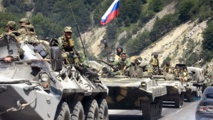
As indicated by a Pew Research Center review graphing the expanding hostility in the middle of Russia and the West, half or a greater amount of general society in most NATO countries think about Russia as a noteworthy military danger to its neighbours.     <div style="position:relative; float:left; padding-right: 1ex;">
      <img src="https://www.wmaker.net/thestrategist/photo/art/default/7967366-12389359.jpg?v=1435668988" alt="How The Neighbours See Russia" title="How The Neighbours See Russia" />
     </div>
     <div>
      No place is concern higher than in Poland where 7 out of each 10 individuals say Moscow represents a noteworthy risk in Eastern Europe. The overview additionally uncovered that 59 percent of the American open hold the same view as their Polish associates. Somewhere else, 53 percent of those surveyed in the United Kingdom said Russia speaks to a noteworthy danger, however this number fell radically in Germany to only 38 percent. <br />  &nbsp; <br />  Considering the level of concern crosswise over NATO part states, it comes as meager amazement that the general perspective of Russia among the general population has plunged. Just 15 percent of Poles and 18 percent of Britons gave Russia a positive audit. Moreover, majorities in most NATO nations point the finger at Russia for the brutality in Ukraine. In the mean time, against Western perspectives and backing for Putin are surging crosswise over Russia. National pride is likewise at a record-breaking high – 63 percent of Russians surveyed said they have an extremely good picture they could call their own nation. Just 12 percent of the Russian open gave NATO a positive rating and a large portion of those surveyed consider the organization together a noteworthy military danger to their country. <br />   <br />   <br />   <br />  <strong>Reference:</strong> <br />  <a class="link" href="http://www.forbes.com/sites/niallmccarthy/2015/06/10/survey-russia-widely-seen-as-a-military-threat-to-its-neighbors-infographic/">http://www.forbes.com/sites/niallmccarthy/2015/06/10/survey-russia-widely-seen-as-a-military-threat-to-its-neighbors-infographic/</a> 
     </div>
     <br style="clear:both;"/>
    ]]>
   </content>
   <link rel="alternate" href="https://www.wmaker.net/thestrategist/How-The-Neighbours-See-Russia_a670.html" />
  </entry>
</feed>