<?xml version="1.0" encoding="UTF-8"?>
<feed xmlns="http://www.w3.org/2005/Atom"  xmlns:media="http://search.yahoo.com/mrss/" xmlns:dc="http://purl.org/dc/elements/1.1/" xmlns:itunes="http://www.itunes.com/dtds/podcast-1.0.dtd" xmlns:geo="http://www.w3.org/2003/01/geo/wgs84_pos#" xmlns:georss="http://www.georss.org/georss" xmlns:photo="http://www.pheed.com/pheed/">
 <title>The Strategist</title>
 <subtitle><![CDATA[Daily news and analysis for corporate &amp; political leaders]]></subtitle>
 <link rel="alternate" type="text/html" href="https://www.wmaker.net/thestrategist" />
 <link rel="self" type="text/xml" href="https://www.wmaker.net/thestrategist/xml/atom.xml" />
 <id>https://www.wmaker.net/thestrategist/</id>
 <updated>2026-11-25T14:01:07+01:00</updated>
 <generator uri="http://www.wmaker.net">Webzine Maker</generator>
  <icon>https://www.wmaker.net/thestrategist/favicon.ico</icon>
  <logo>https://www.wmaker.net/thestrategist/var/style/logo.jpg?v=1426090212</logo>
  <entry>
   <title>Natural Gas: A Critical Component of the Energy Transition</title>
   <updated>2023-09-20T14:36:00+02:00</updated>
   <id>https://www.wmaker.net/thestrategist/Natural-Gas-A-Critical-Component-of-the-Energy-Transition_a6957.html</id>
   <category term="World &amp; Politics" />
   <photo:imgsrc>https://www.wmaker.net/thestrategist/photo/art/imagette/75355578-52891187.jpg</photo:imgsrc>
   <published>2023-09-20T14:19:00+02:00</published>
   <author><name>La Rédaction</name></author>
   <content type="html">
    <![CDATA[
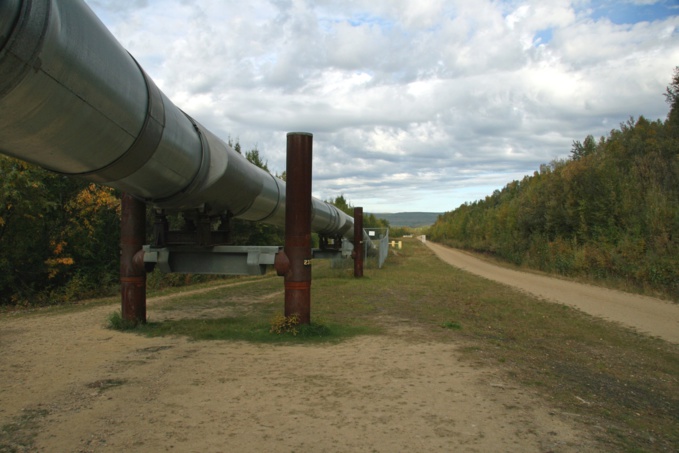
One far-reaching consequence of the Russian invasion of Ukraine has been the total transformation of global gas markets. A global Liquified Natural Gas (LNG) boom has taken place, with LNG markets surpassing the pipeline trade to the detriment of Russia, as Europe make strides in returning to energy normalcy. LNG, it seems, will have a key role to play in Europe’s energy transition.     <div style="position:relative; text-align : center; padding-bottom: 1em;">
      <img src="https://www.wmaker.net/thestrategist/photo/art/default/75355578-52891187.jpg?v=1695214443" alt="Natural Gas: A Critical Component of the Energy Transition" title="Natural Gas: A Critical Component of the Energy Transition" />
     </div>
     <div>
      <div style="text-align: justify;">The European Union has generally been one of the most robust and determined supranational organisms with regards to sustainable development and decarbonisation. There has been a <a class="link" href="https://www.institutmontaigne.org/en/publications/europes-energy-transition-common-challenge">25% decline</a>  in European greenhouse gas emissions in the past 30 years, but reaching carbon neutrality by 2050 necessitates the accelerating of the energy transition plan developed in the framework of the <a class="link" href="https://commission.europa.eu/strategy-and-policy/priorities-2019-2024/european-green-deal_en">Green Deal</a>, Europe’s ambitious plan top become the first climate-neutral continent. One third of the €1.8 trillion post-Covid NextGenerationEU Recovery Plan, and the EU<span dir="RTL">’</span>s seven-year budget, will finance the European Green Deal, which has created a "unified European strategy for energy transition, integrating the divergent interests of member states and supporting the effects of this transformation over time,” according to a <a class="link" href="https://www.institutmontaigne.org/en/publications/europes-energy-transition-common-challenge">report</a>  by Institut Montaigne. <br />  &nbsp;</div>    <div style="text-align: justify;">Indeed, ambitious climate action requires some pragmatism in the short term, as renewable energies are not yet efficient enough, and critical infrastructure is not yet in place. It is impossible to achieve a carbon-neutral economy free from fossil fuels overnight, a transitional phase is key. In 2022, Europe actually found itself on the brink of a real energy crisis as it struggled to wean itself off of Russian oil and gas. At one point, spot prices <a class="link" href="https://www.gisreportsonline.com/r/gas-markets/">peaked</a>  at almost 340 euros per megawatt hour (MWh) (August 26, 2022). We have now returned to 2019-2021 levels, but risks have not entirely disappeared, and a new approach to transitional energy sources has been discussed with fervour. This means finding regular energy supplies that do not seriously jeopardise European economic and ecological models. LNG would seem to provide such a solution. <br />   <br />  <strong>The problem with Russian gas </strong> <br />  &nbsp; <br />  The shock of the Russian invasion of Ukraine reverberated around the world. In Europe, Putin’s threats of an energy war left lawmakers in Brussels deeply concerned about energy security and energy supply chain resilience for the winter of 2022. In 2021, EU countries <a class="link" href="https://ecfr.eu/article/conscious-uncoupling-europeans-russian-gas-challenge-in-2023/">imported</a>  155 billion cubic metres (bcm) of Russian gas, which accounted for around 45 per cent of total gas imports. This represents a huge percentage of energy imports, and the outlook in February 2022 was dire. <br />  &nbsp; <br />  In spite of this, Europe managed to fend off the worst-case scenarios through a program of diversification of its gas suppliers. By November 2022, gas imports from the Russian federation had <a class="link" href="https://www.consilium.europa.eu/en/infographics/eu-gas-supply/">dropped</a>  to around 12% (compared to over 50% at the beginning of 2021), with the EU successfully sourcing Liquified Natural Gas (LNG) in the period from January to November 2022 from countries like Norway (24.93%), Algeria (11.62%) or the US, Qatar and Nigeria (25.72%). LNG imports from the United States significantly jumped from 0.65 bcm in January 2021 to 4.09 bcm by November 2022, peaking at 5.78 bcm in April. <span dir="RTL">“</span><em>Europe</em><span dir="RTL">’</span><em>s energy divorce from Russia is nearly complete,”</em> <a class="link" href="https://www.politico.com/news/2023/02/23/american-energy-europe-putin-00083750">said</a>  Andrew Lipow, president of oil industry and market consulting firm Lipow Oil Associates. <span dir="RTL">“</span><em>We</em><span dir="RTL">’</span><em>re seeing a permanent change as far as how Europe gets its energy in the future. One result is the United States and European energy policy are going to be more closely intertwined.”</em> <br />  &nbsp; <br />  Indeed, a complete decoupling of Russian gas supplies and a banning of pipeline operations with the country was <a class="link" href="https://www.ft.com/content/3568257b-9ab9-43b0-be96-04828b375fa2">touted</a>  in May 2023 by EU countries and their G7 allies, although this was met with some opposition. <em><span dir="RTL">“</span></em><em>There is too much resistance from the countries dependent on the remaining gas,”</em> an EU diplomat <a class="link" href="https://www.politico.eu/article/eu-balks-add-russia-natural-gas-pipeline-ban-sanctions-package-g7/">told</a>  Politico. <em><span dir="RTL">“</span></em><em>The 11th sanctions package is almost done and inserting this huge measure at this moment is not going to work.” </em>With the latest figures showing that EU Russian gas imports at around 8% as of early July 2023, <a class="link" href="https://www.bruegel.org/dataset/european-natural-gas-imports">according</a>  to Bruegel, Ukrainian pressure and the continued threat of Russian energy blackmail could eventually lead to a complete prohibition of pipeline imports. It would be a symbolic step, but structural and supply issues would first have to be overcome. <br />   <br />  <strong>Structural issues</strong> <br />  &nbsp; <br />  Europe’s sudden move away from Russian gas imports meant EU lawmakers began a frenzy to agree energy deals with suppliers from around the world, as Europe’s renewables sector, though making headway, remains insufficient to meet European energy demands. Indeed, wind and solar energy provided a record one fifth of the EU’s electricity in 2022, but also increased its fossil fuel consumption by 3%, according to a <a class="link" href="https://ember-climate.org/insights/research/european-electricity-review-2023/">report</a>  by thinktank Ember. <br />  &nbsp; <br />  Moreover, a decrease in energy generated by hydro and nuclear came at the worst time. <em><span dir="RTL">“</span></em><em>A one-in-500 year drought across Europe led to the lowest level of hydro generation since at least 2000, and there were widespread unexpected French nuclear outages just as German nuclear units were closing,”</em> <a class="link" href="https://www.carbonbrief.org/wind-and-solar-were-eus-top-electricity-source-in-2022-for-first-time-ever/">according</a>  to David Jones, head of data insights at Ember. This dropped was counterbalanced by wind and solar generation, a fall in demand and a <a class="link" href="https://www.reuters.com/business/energy/europes-gas-outlook-transformed-after-mild-winter-kemp-2023-04-13/">record volume</a>  of gas storage following the winter of 2022/23. <br />  &nbsp; <br />  In spite of a better energy outlook for the winter of 2023/24, Europe remains obliged to discourage overconsumption, especially in a fragile economic climate with the threat of inflation, industrial closures and price hikes forever on the horizon. Under current Green Deal rules, renewables are set to <a class="link" href="https://www.eureporter.co/energy/2022/09/16/clean-energy-the-eus-push-for-renewables-and-energy-efficiency/">account</a>  for just 32% of European energy demands by 2030 (with EU lawmakers since demanding a revision of this with an increase up to 45%), means transitional solutions still need to be sought. <br />   <br />  <strong>The search for new suppliers</strong> <br />  &nbsp; <br />  Environmental concerns remain crucial to EU energy policy, but it is important to find a balance between Green Deal ambitions and energy pragmatism. LNG remains an attractive transitional energy source, with <a class="link" href="https://www.nationalgrid.com/stories/energy-explained/what-is-liquefied-natural-gas-lng">carbon dioxide (CO2) emissions</a>  40% less than coal and 30% less than oil. Diversifying supply has been crucial as Europe moves away from Russian gas. <br />  &nbsp; <br />  This has meant that old suppliers, like the U.S., have moved to the front of the queue. In 2022, the Europe became the primary destination for LNG exports from the U.S., <a href="https://www.eia.gov/todayinenergy/detail.php?id=55920#:~:text=Europe%20became%20the%20primary%20destination,U.S.%20LNG%20exports%20to%20Europe.">accounting</a> for 64% (6.8 Bcf/d) of total exports. Four countries—France, the U.K., Spain, and the Netherlands—accounted for a combined 74% (5.0 Bcf/d) of U.S. LNG exports to Europe. Common energy security remains in the interests of both Europe and the U.S. <em><span dir="RTL">“</span></em><em>Over the past year, the United States and Europe have thrown our energy security cooperation into even higher gear,”</em> <a class="link" href="https://www.politico.eu/article/us-supply-natural-gas-lng-eu-antony-blinken/">said</a>  U.S. Secretary of State Antony Blinken, in Brussels for a summit with his EU counterpart Josep Borrell in April. <br />  &nbsp; <br />  But to maximise energy imports and reinforce resilience, new suppliers remain a necessity for long term security. Energy companies and certain producer countries have fully understood the issues at stake, and are making steady progress, both in the exploitation of gas fields and in the exploitation of the finished product via maritime supply routes. Examples include small countries like Mozambique, where companies from Europe and Asia operate the Mozambique LNG project. It was launched following the discovery of a vast quantity of natural gas off the coast of northern Mozambique in 2010, leading to a $20 billion Final Investment Decision in 2019. Unfortunately, preparatory work has been on hold since 2021 due to security concerns in the country’s Cabo Delgado province, where an Islamist insurgency has been raging since 2017. However, given the recent improvements in stabilising the region, the energy companies and their partners <a class="link" href="https://www.thehindubusinessline.com/companies/india-and-total-energies-hold-talks-on-restarting-mozambique-lng-project/article67012074.ece">are studying the conditions</a>  for resuming onshore work in the near future. <br />  &nbsp; <br />  &nbsp;</div>  
     </div>
     <br style="clear:both;"/>
    ]]>
   </content>
   <link rel="alternate" href="https://www.wmaker.net/thestrategist/Natural-Gas-A-Critical-Component-of-the-Energy-Transition_a6957.html" />
  </entry>
  <entry>
   <title>In Russia, the French won more than the World Cup</title>
   <updated>2019-12-18T18:26:00+01:00</updated>
   <id>https://www.wmaker.net/thestrategist/In-Russia-the-French-won-more-than-the-World-Cup_a4179.html</id>
   <category term="Markets &amp; Industries" />
   <photo:imgsrc>https://www.wmaker.net/thestrategist/photo/art/imagette/40899752-34546652.jpg</photo:imgsrc>
   <published>2019-12-18T18:24:00+01:00</published>
   <author><name></name></author>
   <content type="html">
    <![CDATA[
For some people in France, victory was achieved long before the finals. The French national soccer team returned victorious, and so did companies like Louis Vuitton, Metalu Plast or Freyssinet. With a record-high budget for the FIFA 2018 edition in Russia, numerous French companies acquired not only profitable contracts, but a level of publicity they had rarely achieved before. Be it in luxury goods or in infrastructure, many French companies seized the opportunity to showcase their know-how.     <div style="position:relative; text-align : center; padding-bottom: 1em;">
      <img src="https://www.wmaker.net/thestrategist/photo/art/default/40899752-34546652.jpg?v=1576690921" alt="In Russia, the French won more than the World Cup" title="In Russia, the French won more than the World Cup" />
     </div>
     <div>
      <strong>The most expensive world cup ever, despite economic turmoil</strong> <br />  &nbsp; <br />  As often happens, the last World Cup was used as an economic opportunity to launch new developments in Russia, ranging from aerial infrastructures to train lines, and mega-hotels. An initial budget over 14 billion dollars was slated for the event and was quickly overshot so badly that estimates are still competing as to the total price tag. International reporter Henry Ridgwell <a class="link" href="https://www.voanews.com/arts-culture/russias-record-breaking-15-billion-world-cup-price-tag-what-does-it-buy">writes</a>  : “<em>The FIFA World Cup in Russia is the most expensive ever, with an official price tag of $15 billion. Close to $3 billion has been spent on 12 new or upgraded stadiums, and at least another $8 billion on infrastructure, including new roads, railroads and airports</em>.” Unfortunately for the organizers, the 2014 Crimean crisis led to an economic downturn which led to a severe fall of the ruble, placing the financing plan under strain. In the end, a joint venture between the federal government, regional governments and private investors was called upon to finance the 2018 Russian World Cup. Naturally, every business in the world was eager to participate in the pharaonic project, namely for the opportunity to show their skills under such intense light, in addition to being naturally drawn to the jumbo budgets. Marketing reporter Michael Sheetz <a class="link" href="https://www.cnbc.com/2018/06/14/the-business-of-the-world-cup--who-makes-money-and-how-much.html">writes</a>  : “<em>FIFA hauled in $4.8 billion in revenue from the 2014 World Cup, turning a $2.6 billion profit for the association. Broadcast revenue topped $2.43 billion, while sponsorships and ticket sales brought in $1.6 billion and $527 million, respectively. The 2018 World Cup is expected to rake in about $6 billion in revenue for FIFA, up 25 percent from 2014. With as many as 3.2 billion people expected to watch the tournament, broadcast revenue is expected to rise to $3 billion.</em>” <br />  &nbsp; <br />  <strong>French engineering called upon</strong> <br />  &nbsp; <br />  Although national preference was naturally a factor in the attribution of contracts (many contracts landed in Russia, as part of the overall FIFA agreement with Russia), the high standards which FIFA holds itself up to led the organizers to sometimes look abroad for the most relevant solutions, and France was ready for the challenge. French construction company Freyssinet was called upon for the roofing of the new stadiums, namely for the 45,000-seat <a class="link" href="https://www.vinci.com/vinci.nsf/en/news-update/pages/raising_a_roof_for_the_volgograd_stadium_russian_federation_102017.htm">stadium </a>  in Volgograd. The structure required the capacity to safely lift the 1600-ton steel structure, which was assembled on the ground, to the top of the building. French leader Metalu Plast was also selected for in-field installations and provided custom-built field shelters for 6 stadiums. In order to comply with FIFA standards, new shelters had to be designed with a very specific height (7 inches less than the original design), so as to ensure that no spectator loses a second of the show. International marketing manager Guillaume Deguerry <a class="link" href="https://www.ideals.news/Metalu-Plast-helps-everyday-athletes-reach-their-goals-says-Guillaume-Deguerry-Marketing-International-Manager_a1899.html">says</a>  : “<em>The spotlight that the World Cup has put on us has given us great international visibility. Our capacity for innovation, adaptability and the quality of our equipment have been made visible to everyone. As a result of this, we received many requests. For example, we delivered field benches for stadiums in Cameroon while the country was to receive the African Cup of Nations</em>.” Finally, <a class="link" href="https://www.energydigital.com/sustainability/russia-unveils-eco-friendly-football-stadiums-it-hosts-world-cup">Schneider Electric</a>  was awarded the electrification contract to supply the new installations with power. Linking the new structures safely with the electrical grid was no easy task, and the firm was in charge of handing over full and operating control of the stadiums before the kick-off - which it did. Even though such contracts are highly profitable, the main benefit for firms like Schneider Electric is in terms of marketing: with virtually unlimited budgets, organizers systematically choose the best in every sector. <br />  &nbsp; <br />  <strong>Luxury producers selected largely in France</strong> <br />  &nbsp; <br />  The prestige which World Cups gained over the years have made the competition a large marketing target for many French companies specialized in the luxury sector. It was therefore no surprise that Louis Vuitton tried so hard (and managed) to obtain the contract to design and produce the golden trophy which would eventually be handed to its fellow countrymen. So as to reap maximum return on the project, Louis Vuitton launched an entire collection of by-products, based on the soccer theme, handcrafted with the same level of skill for which it is already famous. ForbesLife editor Michael Solomon <a class="link" href="https://www.forbes.com/sites/msolomon/2018/06/05/fifa-world-cup-2018-louis-vuitton-debuts-official-socceri-inspired-capsule-collection/#5259afff17a4">writes</a>  : “<em>Louis Vuitton—which has provided the trophy case since 2010—has created an officially licensed collection to celebrate the 2018 tournament. Made from the brand's signature Epi leather, the Keepall and Apollo bags (as well as smaller accessories) feature the hexagonal pattern of a soccer ball in three basic color combinations.</em>” And the Paris-based luxury brand wasn’t the only one on the deal. Champagne producer Taittinger also negotiated exclusive rights as official champagne supplier for the event, in order to consolidate its leading position on its market. Labelsandlabeling information blog <a class="link" href="https://www.labelsandlabeling.com/news/industry-updates/champagne-packaging-toast-fifa-world-cup-2018">reported</a>  : “<em>Following a long-term association with the global drinks brand, API Group was selected to create the perfect finish for Champagne Taittinger’s Brut Reserve NV. Capitalizing on Taittinger’s position as the official champagne for FIFA World Cup in Russia 2018, the packaging design featured a blue and silver cosmic theme to reflect the host country’s achievements in space.</em>” Taittinger is bound with a long-term partnership with FIFA and has launched marketing since 2013 in that field. <br />  &nbsp; <br />   <br />  2018 was clearly a sunny year for France, who had been yearning for a second world cup for 20 years. But somewhat further from the limelight, French firms were scoring equally well, with billions worth of contracts being assigned to them, and either maintaining them or hoisting them to the first tier in their respective markets. If the multi-million contracts were merely business as usual for large companies like Freyssinet, they were an opportunity for Metalu Plast to be recognized as an important player on the global market. Indeed, as Guillaume Deguerry of Metalu Plast himself <a class="link" href="https://www.ideals.news/Metalu-Plast-helps-everyday-athletes-reach-their-goals-says-Guillaume-Deguerry-Marketing-International-Manager_a1899.html">testifies</a>  : " In our business, it is hard to do better than the Soccer World Cup!
     </div>
     <br style="clear:both;"/>
    ]]>
   </content>
   <link rel="alternate" href="https://www.wmaker.net/thestrategist/In-Russia-the-French-won-more-than-the-World-Cup_a4179.html" />
  </entry>
  <entry>
   <title>Dutch submarine deal: understanding the underpinnings of the equation</title>
   <updated>2018-10-03T10:25:00+02:00</updated>
   <id>https://www.wmaker.net/thestrategist/Dutch-submarine-deal-understanding-the-underpinnings-of-the-equation_a3219.html</id>
   <category term="World &amp; Politics" />
   <photo:imgsrc>https://www.wmaker.net/thestrategist/photo/art/imagette/26109107-27008774.jpg</photo:imgsrc>
   <published>2018-10-03T10:21:00+02:00</published>
   <author><name>La Rédaction</name></author>
   <content type="html">
    <![CDATA[
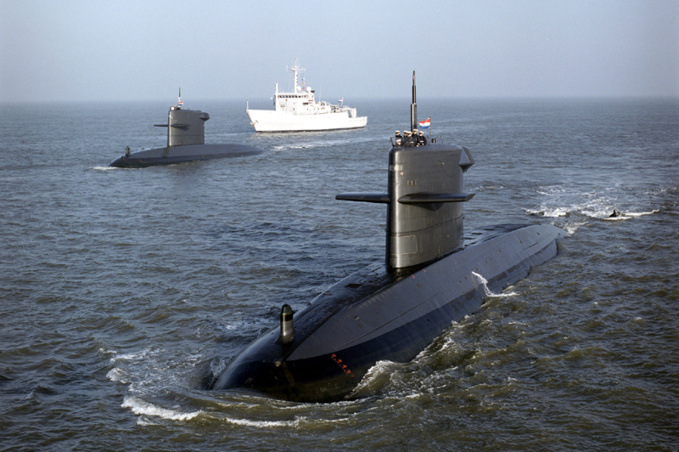
In the coming years, the Netherlands is due to replace its fleet of four submarines, which has served its time. Despite the relatively small fleet, it will represent a strategic investment for The Hague, which will take the time to choose wisely. What ambitions lie behind the deal, and what is the new fleet meant to accomplish?     <div style="position:relative; text-align : center; padding-bottom: 1em;">
      <img src="https://www.wmaker.net/thestrategist/photo/art/default/26109107-27008774.jpg?v=1538556007" alt="Dutch submarine deal: understanding the underpinnings of the equation" title="Dutch submarine deal: understanding the underpinnings of the equation" />
     </div>
     <div>
      The current Dutch submarine fleet is composed of four <u><a class="link" href="http://www.thedrive.com/the-war-zone/21662/swedens-notorious-little-carrier-killing-sub-just-got-some-major-upgrades">Walrus-class ships</a>  </u>. Home-built in the late 1970s, it proved an efficient and reliable, while basic design, with a solid operational history. As a diesel-electric sub, it represents the traditional technology, as the Netherlands never made the choice to go nuclear. Given that the Dutch are original founders of, and well-integrated into, the Atlantic Alliance, the submarine fleet was never meant as a national defence layer, but more as the Netherland’s contribution to NATO’s defensive surveillance of Europe, and that it did well. NATO <u><a class="link" href="https://www.nato.int/cps/en/natohq/news_142255.htm">reported </a>  </u>last year that: “<em>Dutch scientists and experts offered their insights on new ways to address emerging security challenges during a Science for Peace and Security Programme (SPS) Information Day held in The Hague on 15 March 2017. Fruitful cooperation between the Netherlands and NATO’s SPS Programme has already led to exploring common solutions to security challenges in the areas of cyber defense, terrorism, extremism and unexploded ordnance</em>.” Despite their small number and old age, Dutch subs have cut out a reputation throughout the alliance of reliability, and their officers are known for their advanced skills in operating them. Due to its flawless operational attendance and results, the Dutch have carved themselves a sweet spot within NATO, on the submarine front. But after 40 years of operations, replacement day has come for the old Walrus. <br />  &nbsp; <br />  The strategic situation for the Netherlands was, at the time of the launching of the Walrus-class submarines, rather similar to what it is now, with a mid-intensity threat coming from the East and from the northern seas. By the time the 1980s unfolded, Russia was in no condition to represent a serious military threat anymore, but could still hold its ground in Europe, wield considerable influence, and play on the European chess board against the alliance. One of the peacetime pre-conflictual levels is submarine intelligence, gathering data on traffic, ship position, convoy directions, not to mention the liability to lie in wait and strike, if need be. The Dutch submarines proved particularly effective in stealth and detection, during those days. During the 1990s, the collapse on the Soviet Empire, the world’s security hot points moved South, towards the Middle East, and the only tension areas in the East, with instability and fragmentation in the Balkans, involved little or no naval forces. Dutch submarines, like their foreign counterparts, were mainly sent on patrols. <br />  &nbsp; <br />  But<u><a class="link" href="http://www.businessinsider.fr/us/us-navy-requests-more-sonobuoys-amid-concerns-about-russian-subs-2018-7"> Russia is back in the game</a>  </u>, with a huge military build-up, including on the naval front. Once again, NATO will need an effective ally to counter the Russians on the underwater European chessboard, and the Netherlands are keen to get back to the game they were so good at. The Dutch navy scored a peacetime victory in 2011, when it was able to <u><a class="link" href="https://www.ibtimes.co.uk/russian-ministry-defence-claims-its-ships-chased-away-dutch-sub-mediterranean-1590767">sneak up on Russia’s only aircraft carrier</a>  </u> during an exercise, well within firing range. Had the same situation occurred in wartime, the Dutch would have sunk the only aircraft carrier the Russians have, dealing them a war-ending blow. But with the new Russian submarine capabilities, the old Walrus just won’t be up to the new task. Given the small size of the projected fleet, the new units will need to be as multi-role as possible, able to carry out missions ranging from hunting to intelligence gathering, and from special forces deployment to coastal defense. With the Netherland’s commitment both to NATO and to the UE, operational ranges will need to be far-reaching, so as to allow for missions within territorial waters as well as across the globe. The Dutch government is fully aware of this, as <u><a href="https://www.bndestem.nl/politiek/we-gaan-niet-oplappen-we-gaan-vernieuwen~a2327cae/">reported </a></u>by BN DeStem Hanneke Keultjes: “<em>Yes, we have really chosen things, because they are badly needed and the NATO attaches to them for example. New manned submarines that can gather intelligence close to the coast and in deep waters. There are not many countries that can. The air force and the army also benefit from that information. That is necessary for everyone</em>”. The replacement ships should arrive during the 2020s. <br />  &nbsp; <br />  One of the main criteria for submarines lies in their propulsion system and its ability to provide stealth and range. Nuclear propulsion gives the best performances on those fields. But the Netherlands don’t seem keen to jump the gap into the world of nuclear submarines, whose maintenance needs are far greater. Classic propeller submarines cause highly detectable noise by cavitation, and diesel electrics need to resurface regularly to recharge batteries, making them vulnerable to both surface ships and reconnaissance planes. The Netherlands will probably be turning to submarines equipped with Air-independent propulsion system (AIP) to match their abilities to the Russian ones in the near future. In any event, The Hague’s new strategic layout will demand a leap so great it is virtually bound to look abroad for help on the new submarine project. While domestic industries are excellent, the input of neighboring countries will prove necessary to avoid the program stalling. While the domestic-built Walrus made sense at the time, and served their purpose well, they did come at the cost of budget overshot, and foreign partnerships and expertise will address that risk. The Hague will therefore need to resort to European technological partners, while giving its national industry a large share of the contract. <br />  &nbsp; <br />  The best way, according to strategists, to avoid war, is to prepare it. To convince the enemy that any warlike move it could pull would result in immediate demise. Submarines, in this respect, are excellent war-preventers. If Russians find themselves unable to roam Europeans freely, without being detected and monitored by Dutch subs, then the Netherlands will have done much to consolidate the balance of European powers, further securing the country.
     </div>
     <br style="clear:both;"/>
    ]]>
   </content>
   <link rel="alternate" href="https://www.wmaker.net/thestrategist/Dutch-submarine-deal-understanding-the-underpinnings-of-the-equation_a3219.html" />
  </entry>
  <entry>
   <title>U.S Department of Justice probes Deutsche Bank on money laundering charges</title>
   <updated>2015-08-04T07:34:00+02:00</updated>
   <id>https://www.wmaker.net/thestrategist/U-S-Department-of-Justice-probes-Deutsche-Bank-on-money-laundering-charges_a799.html</id>
   <category term="Companies &amp; CEOs" />
   <photo:imgsrc>https://www.wmaker.net/thestrategist/photo/art/imagette/8100305-12629715.jpg</photo:imgsrc>
   <published>2015-08-04T07:33:00+02:00</published>
   <author><name>The Strategist</name></author>
   <content type="html">
    <![CDATA[
The U.S Department of Justice is probing money laundering charges against Deutsche Bank who may have out back-to-back transactions, also known as mirror transactions, on behalf of its Russian clients.     <div style="position:relative; float:left; padding-right: 1ex;">
      <img src="https://www.wmaker.net/thestrategist/photo/art/default/8100305-12629715.jpg?v=1438666457" alt="U.S Department of Justice probes Deutsche Bank on money laundering charges" title="U.S Department of Justice probes Deutsche Bank on money laundering charges" />
     </div>
     <div>
      <div style="text-align: justify;">Basing itself on reports from people who are familiar with the matter, the United States’ Department of Justice will begin investigation into trade related transactions that Germany's Deutsche Bank AG have carried out on behalf of its Russian clienteles. <br />  &nbsp; <br />  What is in question are, what in trading parlance is termed as mirror trades, where for example the Bank’s Russian clients buys stocks in roubles and simultaneously a similar transaction is carried out in London, in which the same stocks are bought in U.S dollars, thus its coinage – mirror trades. In this way, funds move across international borders and the authorities are no wiser; or so one would think. <br />  &nbsp; <br />  Last month, however, The New York State Department of Financial Services (DFS) sought details of possible money laundering transactions from Deutsche Bank on some of its Russian clients. As per a source familiar with the matter these transactions could exceed 6 billion. <br />  &nbsp; <br />  Deutsche Bank has decided to stay mum on this matter and when asked for comments, it redirected all queries to it earlier published statement on the issue along with its annual report. <br />  &nbsp; <br />  <strong>Source(s):</strong><strong> Reuters.com, Bloomberg.com</strong></div>  
     </div>
     <br style="clear:both;"/>
    ]]>
   </content>
   <link rel="alternate" href="https://www.wmaker.net/thestrategist/U-S-Department-of-Justice-probes-Deutsche-Bank-on-money-laundering-charges_a799.html" />
  </entry>
  <entry>
   <title>How The Neighbours See Russia</title>
   <updated>2015-06-30T14:56:00+02:00</updated>
   <id>https://www.wmaker.net/thestrategist/How-The-Neighbours-See-Russia_a670.html</id>
   <category term="World &amp; Politics" />
   <photo:imgsrc>https://www.wmaker.net/thestrategist/photo/art/imagette/7967366-12389359.jpg</photo:imgsrc>
   <published>2015-06-30T14:44:00+02:00</published>
   <author><name>The Strategist</name></author>
   <content type="html">
    <![CDATA[
As indicated by a Pew Research Center review graphing the expanding hostility in the middle of Russia and the West, half or a greater amount of general society in most NATO countries think about Russia as a noteworthy military danger to its neighbours.     <div style="position:relative; float:left; padding-right: 1ex;">
      <img src="https://www.wmaker.net/thestrategist/photo/art/default/7967366-12389359.jpg?v=1435668988" alt="How The Neighbours See Russia" title="How The Neighbours See Russia" />
     </div>
     <div>
      No place is concern higher than in Poland where 7 out of each 10 individuals say Moscow represents a noteworthy risk in Eastern Europe. The overview additionally uncovered that 59 percent of the American open hold the same view as their Polish associates. Somewhere else, 53 percent of those surveyed in the United Kingdom said Russia speaks to a noteworthy danger, however this number fell radically in Germany to only 38 percent. <br />  &nbsp; <br />  Considering the level of concern crosswise over NATO part states, it comes as meager amazement that the general perspective of Russia among the general population has plunged. Just 15 percent of Poles and 18 percent of Britons gave Russia a positive audit. Moreover, majorities in most NATO nations point the finger at Russia for the brutality in Ukraine. In the mean time, against Western perspectives and backing for Putin are surging crosswise over Russia. National pride is likewise at a record-breaking high – 63 percent of Russians surveyed said they have an extremely good picture they could call their own nation. Just 12 percent of the Russian open gave NATO a positive rating and a large portion of those surveyed consider the organization together a noteworthy military danger to their country. <br />   <br />   <br />   <br />  <strong>Reference:</strong> <br />  <a class="link" href="http://www.forbes.com/sites/niallmccarthy/2015/06/10/survey-russia-widely-seen-as-a-military-threat-to-its-neighbors-infographic/">http://www.forbes.com/sites/niallmccarthy/2015/06/10/survey-russia-widely-seen-as-a-military-threat-to-its-neighbors-infographic/</a> 
     </div>
     <br style="clear:both;"/>
    ]]>
   </content>
   <link rel="alternate" href="https://www.wmaker.net/thestrategist/How-The-Neighbours-See-Russia_a670.html" />
  </entry>
</feed>