<?xml version="1.0" encoding="UTF-8"?>
<feed xmlns="http://www.w3.org/2005/Atom"  xmlns:media="http://search.yahoo.com/mrss/" xmlns:dc="http://purl.org/dc/elements/1.1/" xmlns:itunes="http://www.itunes.com/dtds/podcast-1.0.dtd" xmlns:geo="http://www.w3.org/2003/01/geo/wgs84_pos#" xmlns:georss="http://www.georss.org/georss" xmlns:photo="http://www.pheed.com/pheed/">
 <title>The Strategist</title>
 <subtitle><![CDATA[Daily news and analysis for corporate &amp; political leaders]]></subtitle>
 <link rel="alternate" type="text/html" href="https://www.wmaker.net/thestrategist" />
 <link rel="self" type="text/xml" href="https://www.wmaker.net/thestrategist/xml/atom.xml" />
 <id>https://www.wmaker.net/thestrategist/</id>
 <updated>2026-11-25T13:51:01+01:00</updated>
 <generator uri="http://www.wmaker.net">Webzine Maker</generator>
  <icon>https://www.wmaker.net/thestrategist/favicon.ico</icon>
  <logo>https://www.wmaker.net/thestrategist/var/style/logo.jpg?v=1426090212</logo>
  <entry>
   <title>Dutch submarine deal: understanding the underpinnings of the equation</title>
   <updated>2018-10-03T10:25:00+02:00</updated>
   <id>https://www.wmaker.net/thestrategist/Dutch-submarine-deal-understanding-the-underpinnings-of-the-equation_a3219.html</id>
   <category term="World &amp; Politics" />
   <photo:imgsrc>https://www.wmaker.net/thestrategist/photo/art/imagette/26109107-27008774.jpg</photo:imgsrc>
   <published>2018-10-03T10:21:00+02:00</published>
   <author><name>La Rédaction</name></author>
   <content type="html">
    <![CDATA[
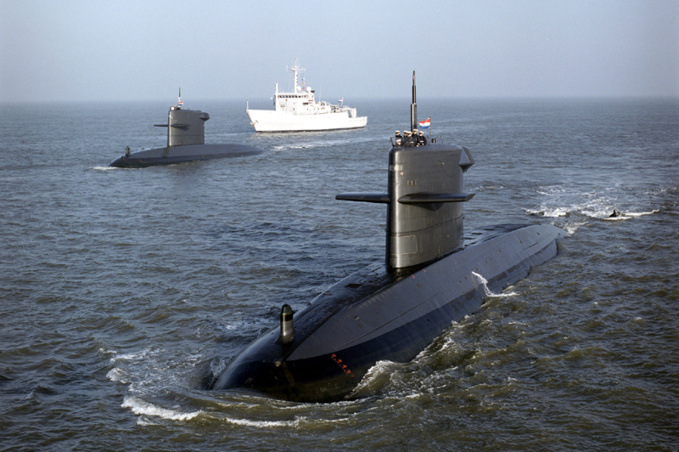
In the coming years, the Netherlands is due to replace its fleet of four submarines, which has served its time. Despite the relatively small fleet, it will represent a strategic investment for The Hague, which will take the time to choose wisely. What ambitions lie behind the deal, and what is the new fleet meant to accomplish?     <div style="position:relative; text-align : center; padding-bottom: 1em;">
      <img src="https://www.wmaker.net/thestrategist/photo/art/default/26109107-27008774.jpg?v=1538556007" alt="Dutch submarine deal: understanding the underpinnings of the equation" title="Dutch submarine deal: understanding the underpinnings of the equation" />
     </div>
     <div>
      The current Dutch submarine fleet is composed of four <u><a class="link" href="http://www.thedrive.com/the-war-zone/21662/swedens-notorious-little-carrier-killing-sub-just-got-some-major-upgrades">Walrus-class ships</a>  </u>. Home-built in the late 1970s, it proved an efficient and reliable, while basic design, with a solid operational history. As a diesel-electric sub, it represents the traditional technology, as the Netherlands never made the choice to go nuclear. Given that the Dutch are original founders of, and well-integrated into, the Atlantic Alliance, the submarine fleet was never meant as a national defence layer, but more as the Netherland’s contribution to NATO’s defensive surveillance of Europe, and that it did well. NATO <u><a class="link" href="https://www.nato.int/cps/en/natohq/news_142255.htm">reported </a>  </u>last year that: “<em>Dutch scientists and experts offered their insights on new ways to address emerging security challenges during a Science for Peace and Security Programme (SPS) Information Day held in The Hague on 15 March 2017. Fruitful cooperation between the Netherlands and NATO’s SPS Programme has already led to exploring common solutions to security challenges in the areas of cyber defense, terrorism, extremism and unexploded ordnance</em>.” Despite their small number and old age, Dutch subs have cut out a reputation throughout the alliance of reliability, and their officers are known for their advanced skills in operating them. Due to its flawless operational attendance and results, the Dutch have carved themselves a sweet spot within NATO, on the submarine front. But after 40 years of operations, replacement day has come for the old Walrus. <br />  &nbsp; <br />  The strategic situation for the Netherlands was, at the time of the launching of the Walrus-class submarines, rather similar to what it is now, with a mid-intensity threat coming from the East and from the northern seas. By the time the 1980s unfolded, Russia was in no condition to represent a serious military threat anymore, but could still hold its ground in Europe, wield considerable influence, and play on the European chess board against the alliance. One of the peacetime pre-conflictual levels is submarine intelligence, gathering data on traffic, ship position, convoy directions, not to mention the liability to lie in wait and strike, if need be. The Dutch submarines proved particularly effective in stealth and detection, during those days. During the 1990s, the collapse on the Soviet Empire, the world’s security hot points moved South, towards the Middle East, and the only tension areas in the East, with instability and fragmentation in the Balkans, involved little or no naval forces. Dutch submarines, like their foreign counterparts, were mainly sent on patrols. <br />  &nbsp; <br />  But<u><a class="link" href="http://www.businessinsider.fr/us/us-navy-requests-more-sonobuoys-amid-concerns-about-russian-subs-2018-7"> Russia is back in the game</a>  </u>, with a huge military build-up, including on the naval front. Once again, NATO will need an effective ally to counter the Russians on the underwater European chessboard, and the Netherlands are keen to get back to the game they were so good at. The Dutch navy scored a peacetime victory in 2011, when it was able to <u><a class="link" href="https://www.ibtimes.co.uk/russian-ministry-defence-claims-its-ships-chased-away-dutch-sub-mediterranean-1590767">sneak up on Russia’s only aircraft carrier</a>  </u> during an exercise, well within firing range. Had the same situation occurred in wartime, the Dutch would have sunk the only aircraft carrier the Russians have, dealing them a war-ending blow. But with the new Russian submarine capabilities, the old Walrus just won’t be up to the new task. Given the small size of the projected fleet, the new units will need to be as multi-role as possible, able to carry out missions ranging from hunting to intelligence gathering, and from special forces deployment to coastal defense. With the Netherland’s commitment both to NATO and to the UE, operational ranges will need to be far-reaching, so as to allow for missions within territorial waters as well as across the globe. The Dutch government is fully aware of this, as <u><a href="https://www.bndestem.nl/politiek/we-gaan-niet-oplappen-we-gaan-vernieuwen~a2327cae/">reported </a></u>by BN DeStem Hanneke Keultjes: “<em>Yes, we have really chosen things, because they are badly needed and the NATO attaches to them for example. New manned submarines that can gather intelligence close to the coast and in deep waters. There are not many countries that can. The air force and the army also benefit from that information. That is necessary for everyone</em>”. The replacement ships should arrive during the 2020s. <br />  &nbsp; <br />  One of the main criteria for submarines lies in their propulsion system and its ability to provide stealth and range. Nuclear propulsion gives the best performances on those fields. But the Netherlands don’t seem keen to jump the gap into the world of nuclear submarines, whose maintenance needs are far greater. Classic propeller submarines cause highly detectable noise by cavitation, and diesel electrics need to resurface regularly to recharge batteries, making them vulnerable to both surface ships and reconnaissance planes. The Netherlands will probably be turning to submarines equipped with Air-independent propulsion system (AIP) to match their abilities to the Russian ones in the near future. In any event, The Hague’s new strategic layout will demand a leap so great it is virtually bound to look abroad for help on the new submarine project. While domestic industries are excellent, the input of neighboring countries will prove necessary to avoid the program stalling. While the domestic-built Walrus made sense at the time, and served their purpose well, they did come at the cost of budget overshot, and foreign partnerships and expertise will address that risk. The Hague will therefore need to resort to European technological partners, while giving its national industry a large share of the contract. <br />  &nbsp; <br />  The best way, according to strategists, to avoid war, is to prepare it. To convince the enemy that any warlike move it could pull would result in immediate demise. Submarines, in this respect, are excellent war-preventers. If Russians find themselves unable to roam Europeans freely, without being detected and monitored by Dutch subs, then the Netherlands will have done much to consolidate the balance of European powers, further securing the country.
     </div>
     <br style="clear:both;"/>
    ]]>
   </content>
   <link rel="alternate" href="https://www.wmaker.net/thestrategist/Dutch-submarine-deal-understanding-the-underpinnings-of-the-equation_a3219.html" />
  </entry>
  <entry>
   <title>HE Dr. Khalid bin Mohammad Al Attiyah, Qatari defense minister, means business</title>
   <updated>2018-04-06T17:03:00+02:00</updated>
   <id>https://www.wmaker.net/thestrategist/HE-Dr-Khalid-bin-Mohammad-Al-Attiyah-Qatari-defense-minister-means-business_a2842.html</id>
   <category term="World &amp; Politics" />
   <photo:imgsrc>https://www.wmaker.net/thestrategist/photo/art/imagette/21387338-24445197.jpg</photo:imgsrc>
   <published>2018-04-02T16:59:00+02:00</published>
   <author><name>La Rédaction</name></author>
   <content type="html">
    <![CDATA[
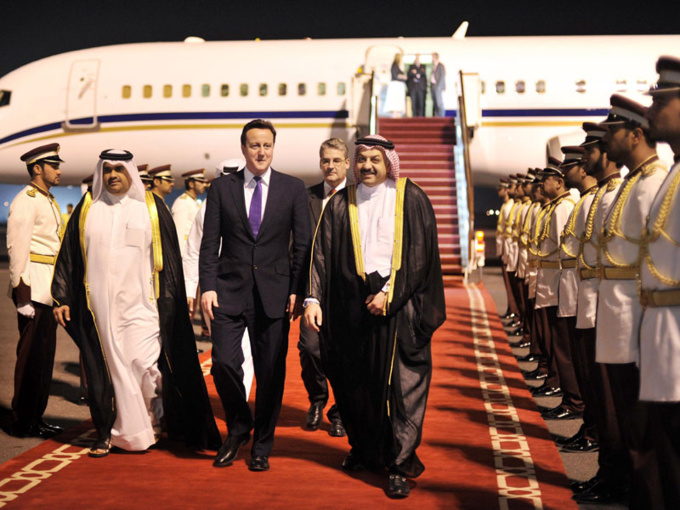
Credit must be given where credit is due: statesmen in the Gulf have a sense of long-term strategy. Fully aware that the oil blessing would one day tap out, all the Gulf States have long been preparing the future and equipping their countries with all components of modern states, including capacity for self-defense. HE Dr. Khalid bin Mohammad Al Attiyah, who heads the Qatari Defense ministry, is currently getting the emirate’s armed forces shipshape, with state-of-the-art equipment and top-of-the-line training.     <div style="position:relative; text-align : center; padding-bottom: 1em;">
      <img src="https://www.wmaker.net/thestrategist/photo/art/default/21387338-24445197.jpg?v=1523027898" alt="HE Dr. Khalid bin Mohammad Al Attiyah, Qatari defense minister, means business" title="HE Dr. Khalid bin Mohammad Al Attiyah, Qatari defense minister, means business" />
     </div>
     <div>
      Three of Qatar's borders are made of waters from the Persian Gulf, which is dominated by large and potent neighbors, such as hostile Saudi Arabia and unpredictable Iran. In order to protect Qatar’s regional independence, HE Dr. Khalid bin Mohammad Al Attiyah has invested in the most advanced naval and air defense systems which the global market has to offer. <a class="link" href="http://www.mbda-systems.com/press-releases/mbda-signs-contract-to-supply-a-coastal-missile-system-to-qatar/">Announced </a>  by MBDA itself, “<em>1st September 2016, MBDA signed today in Doha a contract for the supply of a coastal defence system for the Qatari Emiri Naval Forces (QENF). This innovative coastal missile system will deploy two different munitions, Marte ER (the Extended Range version of the Marte missile) and Exocet MM40 Block 3, and it will be able to work in autonomous mode with its own radar, or alternatively by data-linking to a higher level within a wider coastal surveillance network. The supply of these coastal missile systems will allow the QENF to prevent hostile ships from reaching and threatening their territorial waters</em>.”. This new missile system will be completed with the interception capacities of both Eurofighters and Dassault Rafale, both 4th generation advanced fighters, and which were recently purchased in large numbers. Pierre Tran, defense analyst for <a class="link" href="https://www.defensenews.com/global/mideast-africa/2017/12/07/qatar-moves-to-buy-more-rafale-jets-order-infantry-fighting-vehicles/">Defense News</a>, says “<em>That order stems from Qatar exercising an option for 12 Rafale fighters, boosting its acquisition to 36, based on a contract signed May 2015, Dassault Aviation said in a statement. The Rafale fighters will be equipped with Lockheed Martin Sniper laser targeting pods. Additionally, they will be stripped of the capability to deliver nuclear weapons and will also lose NATO standard communications capabilities that were fitted for the French Air Force and Navy.</em>”. <br />  &nbsp; <br />  With Saudi Arabia, now its main regional nemesis, as its only border, Qatar fears invasion. Al-Jazeera reported “<em>In an interview with the Washington Post on Friday, Khalid bin Mohammad al-Attiyah said his Gulf neighbors have "tried everything" to destabilize the country, but their intentions to invade were "[defused]"</em> by Qatar. "<em>They have intentions to intervene militarily," said al-Attiyah</em>”. However, Al-Attiyah is aware that most regional troops, including Saudi ones, use an aging fleet of BMP-3-type vehicles, standardly equipped with 30-mm cannons. Talks are underway to acquire new-generation VBCI Infantry Fighting Vehicles (IFVs) equipped with CTA-40-gun turrets. Developed by Nexter and BAE systems, CTA 40 is a new generation caliber which is far lighter and more powerful than previous-generation 30-mm cannons. A gamechanger on the tactical battlefield, it places standard IFVs at its mercy, whereas they were only threatened by heavy armor until now. Armament website Firearmblog <a class="link" href="http://www.thefirearmblog.com/blog/2016/04/01/the-age-of-telescoped-ammunition-has-arrived-uk-receives-40mm-cta/">explains </a>  “<em>Despite its 40mm caliber, the CTCS gun is only about the same size as the 30mm Mk. 44 Bushmaster II cannon used on some armored vehicles and ships, and only a little bit bigger than the 30mm RARDEN cannon used in the Warrior IFV currently. Therefore, it offers a significant firepower upgrade to light armored vehicles like the Warrior.</em>” CTA 40 gives IFVs firepower comparable to tanks, while increasing the speed and mobility of Infantry vehicles, thanks to reduced weight. Arthur Villasanta <a class="link" href="http://www.chinatopix.com/articles/102267/20160930/planned-infantry-rifle-fires-telescoped-bullets-3x-deadlier-m4s.htm">says </a>  “<em>In contrast, a telescoped round is one where the projectile is partially or completely enveloped by the propellant. Telescoped ammunition is some 40 percent lighter than traditional ammunition.</em>” With such equipment, the Qatari army would be immune to enemy mounted troops and able to strike harder and faster than its counterparts. <br />  &nbsp; <br />  Eager to break the new equipment in, HE Dr. Khalid bin Mohammad Al Attiyah has signed training agreements with neighboring ally Turkey. Yunus Paksoi <a class="link" href="https://www.dailysabah.com/diplomacy/2017/06/20/turkish-troops-in-qatar-to-train-local-forces-ensure-regional-peace">reported </a>  for daily Sabah “<em>Turkish military forces arrived in Qatar on Sunday as part of a bilateral agreement between the two countries to train local Qatari gendarmerie forces and ensure regional stability as well as peace, Parliamentary National Defense Committee head Yusuf Beyazıt told Daily Sabah.</em>”. In the aftermath, Middle East Observer <a class="link" href="https://www.middleeastobserver.org/2017/06/09/pakistan-to-send-soldiers-to-qatar/">announced </a>  “<em>After the Grand National Assembly of Turkey (TBMM) decided to deploy troops in Qatar, Pakistan also took action to send soldiers to Qatar. Pakistan has passed a motion to send twenty thousand soldiers to Qatar. Turkey launched diplomatic initiatives to defuse the tension in the region after nine countries, including Saudi Arabia and Egypt, cut their diplomatic ties with Qatar, and tried to impose an embargo on the country. Within this framework, Turkish President Recep Tayyip Erdoğan spoke to the leaders of the countries in the region and called for dialogue for settlement of the crisis.</em>” <br />  &nbsp; <br />  Qatar shares the goal of its regional counterparts of settling the current crisis in the diplomatic way, but such a goal must include military stabilization. HE Dr. Khalid bin Mohammad Al Attiyah knows that weak armed forces will only fuel Qatar’s vulnerability and weaken its position. The best way to achieve peace, he knows, is to prepare for war. As another stilt of the stabilization strategy, Qatar has sought to acquire new sources of international support and fresh alliances. The break-off with Saudi Arabia therefore logically resulted in a new (fragile) alliance with Iran (a long-term opponent of Saudi Arabia), and the large-scale military-equipment deals are a way to revive diplomatic ties with supplying countries (France for the VBCI and Rafale, France and England for the CTA 40 turrets, and the European Union for the Eurofighter). <br />  &nbsp; <br />  As the wealth of the country builds, Qatar knows it will increasingly become a yummy-looking target in the potentially unstable region and needs to compensate its small size with a professional army capable of standing its ground, facing any other in the area. In addition to the capacity for self-defense, HE Dr. Khalid bin Mohammad Al Attiyah knows that many global players need reliable security partners in the highly strategic region - hence the recent purchase of what the market has best to offer.
     </div>
     <br style="clear:both;"/>
    ]]>
   </content>
   <link rel="alternate" href="https://www.wmaker.net/thestrategist/HE-Dr-Khalid-bin-Mohammad-Al-Attiyah-Qatari-defense-minister-means-business_a2842.html" />
  </entry>
  <entry>
   <title>Is Sikorsky a drag on United Technologies?</title>
   <updated>2015-03-17T06:19:00+01:00</updated>
   <id>https://www.wmaker.net/thestrategist/Is-Sikorsky-a-drag-on-United-Technologies_a95.html</id>
   <category term="Markets &amp; Industries" />
   <photo:imgsrc>https://www.wmaker.net/thestrategist/photo/art/imagette/7577248-11696535.jpg</photo:imgsrc>
   <published>2015-03-17T05:31:00+01:00</published>
   <author><name>The Strategist</name></author>
   <content type="html">
    <![CDATA[
With a shrinking defense market is Sikorsky a drag on United Technologies? Or is it more in the nature of a long term investment?     <div style="position:relative; float:left; padding-right: 1ex;">
      <img src="https://www.wmaker.net/thestrategist/photo/art/default/7577248-11696535.jpg?v=1426569450" alt="Is Sikorsky a drag on United Technologies?" title="Is Sikorsky a drag on United Technologies?" />
     </div>
     <div>
      <div style="text-align: justify;">Way back in December 2013, in an interview with Louis Chênevert, fomer chairman of United Technologies, the question of divesting Sikorsky from the company had come up. Sikorsky is a well-known division of United Technologies that manufactures helicopters.&nbsp; The Marine One, the personal chopper of the US president, and the Black Hawk are the public face of Sikorsky. <br />   <br />  The former chairman, made it pretty clear that Sikorsky was not on the chopping blocks. He said “We’ve got all these new product lines that we have won in the market that are in their infancy.” <br />   <br />  In November this year, Mr. Chênevert was ousted since the board thought that his focus was not exclusively on the job. Several reports from insiders have mentioned the fact that this extreme step was taken either because his focus was more on building a yacht in Taiwan or maybe because he was getting way too attached with Sikorsky. <br />   <br />  Gregory Hayes who succeeded Mr. Chênevert’s has announced that Unitech technologies is now looking for “<a class="link" href="http://www.utc.com/News/Pages/United-Technologies-To-Explore-Strategic-Alternatives-For-Its-Sikorsky-Aircraft-Business.aspx" target="_blank">strategic alternatives</a>  ” &nbsp;which amongst other things includes the spinning of the Sikorsky division. In view of the now shrinking defense market, the move makes sense. Although Sikorsky gives United Technologies a high profile, it currently comes attached with low margins. <br />   <br />  In an investor’s conference in New York, United Technologies presented charts which show that although other division were doing well, Sikorsky’s performance was way below standards. Its subpar performance in terms of revenue generation and in market growth led to this decision. <br />   <br />  Although Sikorsky’s revenue rose by 10% its operating profit shrank from 10.5% to 2.9%. However, other divisions such as Goodrich, an aerospace division which is in the business of making jet engines, showed sales growth of more than 30%. Its operating margins climbed from a modest 11% to almost 17%. <br />   <br />  With the expanding aerospace and aviation market, and with United Technologies getting better at what it does, revenues and operating margins are expected to go northwards. In this line of business, it’s all about operational leverage, i.e. generating additional operational earnings through relatively fixed investments in plant and machinery. <br />   <br />  Mr. Hayes, went on to say that</div>    <blockquote>  <div style="text-align: justify;">“…[Sikorsky is] a very, very good business … [however] it’s just not quite the business we want … [because] but we won’t see any volume until the late 2020s”.</div>  </blockquote>    <div style="text-align: justify;"> <br />  Although Sikorsky has order coming up to the tune of $438 million, with the Canadian Government placing orders for the Cyclone helicopters, however it acts as a drag on United Technologies since its price/earnings fall way below when compared to pure defense contractors such as BAE Systems and Lockheed Martin. At best, it has long term potential. <br />   <br />  By carving off Sikorsky and by focusing purely on its growing stream of profits generated out of operations in commercial aerospace, United Technologies will have a free hand in drawing investor’s attention for its operations. <br />   <br />  Mr. Hayes is targeting 0.3%-0.5% in operational profit growth per year, for the next decade. United Technology is expected to generate to generate $40-$50 billion in cash in the next decade, depending on whether it goes in for additional funding.&nbsp; <br />   <br />   <br />  <strong>References</strong>: <br />  <a class="link" href="http://www.forbes.com/sites/danielfisher/2015/03/12/united-technologies-looks-at-ditching-sikorsky-to-achieve-flight-velocity/">http://www.forbes.com/sites/danielfisher/2015/03/12/united-technologies-looks-at-ditching-sikorsky-to-achieve-flight-velocity/</a>  <br />  <a class="link" href="http://www.utc.com/News/Pages/United-Technologies-To-Explore-Strategic-Alternatives-For-Its-Sikorsky-Aircraft-Business.aspx">http://www.utc.com/News/Pages/United-Technologies-To-Explore-Strategic-Alternatives-For-Its-Sikorsky-Aircraft-Business.aspx</a> </div>  
     </div>
     <br style="clear:both;"/>
    ]]>
   </content>
   <link rel="alternate" href="https://www.wmaker.net/thestrategist/Is-Sikorsky-a-drag-on-United-Technologies_a95.html" />
  </entry>
</feed>