<?xml version="1.0" encoding="UTF-8"?>
<feed xmlns="http://www.w3.org/2005/Atom"  xmlns:media="http://search.yahoo.com/mrss/" xmlns:dc="http://purl.org/dc/elements/1.1/" xmlns:itunes="http://www.itunes.com/dtds/podcast-1.0.dtd" xmlns:geo="http://www.w3.org/2003/01/geo/wgs84_pos#" xmlns:georss="http://www.georss.org/georss" xmlns:photo="http://www.pheed.com/pheed/">
 <title>The Strategist</title>
 <subtitle><![CDATA[Daily news and analysis for corporate &amp; political leaders]]></subtitle>
 <link rel="alternate" type="text/html" href="https://www.wmaker.net/thestrategist" />
 <link rel="self" type="text/xml" href="https://www.wmaker.net/thestrategist/xml/atom.xml" />
 <id>https://www.wmaker.net/thestrategist/</id>
 <updated>2026-11-25T14:10:56+01:00</updated>
 <generator uri="http://www.wmaker.net">Webzine Maker</generator>
  <icon>https://www.wmaker.net/thestrategist/favicon.ico</icon>
  <logo>https://www.wmaker.net/thestrategist/var/style/logo.jpg?v=1426090212</logo>
  <entry>
   <title>DI, French leader of asbestos removal and decontamination</title>
   <updated>2020-07-22T17:10:00+02:00</updated>
   <id>https://www.wmaker.net/thestrategist/DI-French-leader-of-asbestos-removal-and-decontamination_a4619.html</id>
   <category term="Companies &amp; CEOs" />
   <photo:imgsrc>https://www.wmaker.net/thestrategist/photo/art/imagette/48381601-37991591.jpg</photo:imgsrc>
   <published>2020-08-03T09:00:00+02:00</published>
   <author><name>La Rédaction</name></author>
   <content type="html">
    <![CDATA[
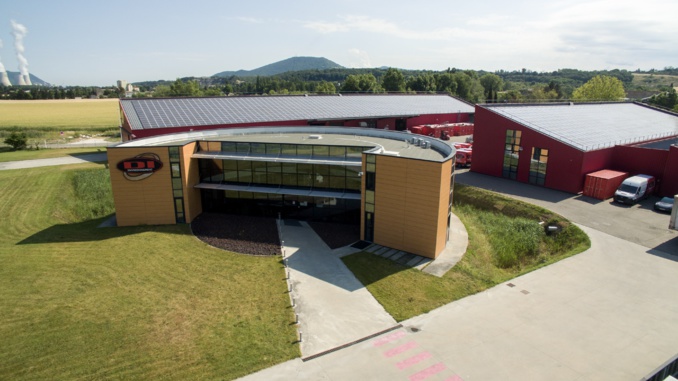
As environmental and anti-pollution standards tightened, in all countries across Europe and America, finding specialists who are able to address all projects has become more important than ever. If industrial and sanitary norms are not met, projects can come to a standstill or even require catastrophic deconstruction. In order to address this rising complexity, French leader DI has focused on all fields of decontamination and made itself indispensable for many projects and become a European reference.     <div style="position:relative; text-align : center; padding-bottom: 1em;">
      <img src="https://www.wmaker.net/thestrategist/photo/art/default/48381601-37991591.jpg?v=1595431611" alt="DI, French leader of asbestos removal and decontamination" title="DI, French leader of asbestos removal and decontamination" />
     </div>
     <div>
      <strong>Achieving full potential </strong> <br />  &nbsp; <br />  As is often the case with service companies, DI didn’t initially <a class="link" href="http://di-environnement.com/">begin its operations</a>  in the fields where it eventually specialized. In 1987, the company launched its offer with a technique which was still nascent at the time: <a class="link" href="https://www.meidilight.com/insulate-roof-projected-insulation/">projected insulation</a>. Spraying insulation materials offered possibilities which previous techniques simply could not match: large surfaces could be insulated perfectly, rapidly and durably, no matter how uneven or complex the surface was. As business expanded, the company was running ever more often into projects where operations were hindered by the presence of <a class="link" href="https://health.clevelandclinic.org/asbestos-still-lurks-older-buildings-lungs-risk/">contaminants </a>  - namely, asbestos. As a natural extension of its services, DI thus started offering de-contamination and asbestos operations. This comprehensive approach had the double benefit of speeding up and securing projects, by having all sub-tasks entrusted to one single supplier. And so, DI gradually became specialized in all decontamination operations and is now a reference on its market, both in France and abroad. <br />  &nbsp; <br />  <strong>Multiple skills required</strong> <br />  &nbsp; <br />  Decontamination processes have multiplied and become increasingly complex, as scientific techniques improved and new substances were gradually identified as sanitary hazards, thus requiring specialists to do the job. The National academies of Sciences, engineering and medicine <a class="link" href="https://www.nap.edu/read/11324/chapter/12">writes</a>  : “<em>The actual decontamination operation of a building is likely to be conducted in a few days, although the schedule depends on the size of the project and its complexity. Temperature, relative humidity, concentration of decontamination agent, and contact time typically must be measured and recorded during decontamination. The success of the operation, however, and the avoidance of major technical or public relations problems, will largely depend on the quality of the planning</em>.” Obligation to decontaminate can stem from the presence of multiple substances, ranging from oil residue to heavy metals, with asbestos and many others in between. Asbestos is still very present in constructions, and its disposal requires specific and elaborate skills. Any deconstruction is likely to generate dust particles which workers must necessarily be protected from. According to the specific nature of the project, DI has a tailormade approach to ensure that decontamination will be thorough, complete or in compliance with standards. Hugo Rosati, CEO for DI, says: “<em>DI Environnement continues its specialization by developing its own processes and materials, from design to manufacturing. Also, as the regulations relating to pollutants extended to all sectors of activity, we have diversified our areas of intervention in order to respond to all industrial issues and pollution control issues</em>.” <br />  &nbsp; <br />  <strong>Ever-higher stakes</strong> <br />  &nbsp; <br />  Decontamination and asbestos removal are no longer a luxury, or even an option, for modern construction projects. Obtaining the adequate clearances, many of which hinge on environmental standards being met, is now essential to construction projects whose timeline can be severely disrupted if decontamination issues arise. Additionally, environmental standards have existed for decades, but their actual enforcement is more recent and is still being reinforced, year after year. Given the <a class="link" href="http://environmentclearance.nic.in/writereaddata/online/RiskAssessment/07042018FLJF6GHQRiskAssessment.pdf">subsequent risk</a>  that a project would be halted for sanitary concerns, by the authorities - or even worse, reversed, because decontamination diligence was not properly carried out - DI positions itself not as a service provider but as a project partner, ensuring the smooth operation of a construction project. Hugo Rosati adds: “<em>We are built flexibly: DI Environment is organized to provide a local service to its customers, via our multiple locations, but also to manage large-scale projects, with multiple pollutants and related trades. This strategy ultimately allows us to be both an ultra-specialized player in pollution control but also to be able to send an offer to suit all of our customers' requests for pollution control, regardless of the sector of activity</em>.” <br />  &nbsp; <br />  <strong>The international dimension</strong> <br />  &nbsp; <br />  Originally operating on the French market, DI built its name and fame on domestic territory. Once leadership was acquired, an opportunity dawned on the firm: not only do all neighbouring countries all apply similar environmental and sanitary regulations, but <a class="link" href="https://iclg.com/practice-areas/environment-and-climate-change-laws-and-regulations/france">France has the most stringent set of rules</a>. As a consequence, it rapidly became obvious to DI that moving into markets abroad made sense, as it was already supplying services of a more demanding nature at home. Hugo Rosati explains “<em>Our benchmark position in this area and our know-how also allow us to project ourselves into markets beyond our borders: our subsidiaries in Africa and our major international projects represent an increasing part of our activity. Above all, the prospects for depollution and asbestos removal on a global scale, which are on an exponential trend, push us to develop in other regions. So yes, the international is, and will become all the more, an important issue of growth and development for DI Environment.</em>” With active development in Africa, DI aspires to uphold standards in regions where environmental stakes are high, and which have long been overlooked. <br />  &nbsp; <br />  DI’s expansion has been steadfast, since its creation in 1987, and much of it was owed to its capacity to adapt to new demand and standards. On many occasions, the decontamination firm not only met new standards, but exceeded them with newly created techniques, thus helping the shaping of a new environmental deal in France, and then abroad. With its current international expansion, DI will likely be identified as a strategic partner by global construction companies, who may see the value in applying the same high standards to all projects, regardless of location.
     </div>
     <br style="clear:both;"/>
    ]]>
   </content>
   <link rel="alternate" href="https://www.wmaker.net/thestrategist/DI-French-leader-of-asbestos-removal-and-decontamination_a4619.html" />
  </entry>
  <entry>
   <title>What will the house of tomorrow look like?</title>
   <updated>2017-05-30T19:14:00+02:00</updated>
   <id>https://www.wmaker.net/thestrategist/What-will-the-house-of-tomorrow-look-like_a2188.html</id>
   <category term="Innovation &amp; Tools" />
   <photo:imgsrc>https://www.wmaker.net/thestrategist/photo/art/imagette/14127634-20184501.jpg</photo:imgsrc>
   <published>2017-05-30T08:08:00+02:00</published>
   <author><name>La Rédaction</name></author>
   <content type="html">
    <![CDATA[
Although home-building is one of the oldest trades in the world, it bears remarkable energy for innovation. Around the world, research and development labs are working on improving our abodes in all ways, designing homes that will be more affordable, more secure, with better energetic performance. What do the engineers and inventors of the world have in store for us?     <div style="position:relative; text-align : center; padding-bottom: 1em;">
      <img src="https://www.wmaker.net/thestrategist/photo/art/default/14127634-20184501.jpg?v=1496164335" alt="What will the house of tomorrow look like?" title="What will the house of tomorrow look like?" />
     </div>
     <div>
      The concept of regulating house energy according to the exact location of its inhabitants has been in the air for quite some time, and even technologically feasible for quite some time. However, the cost of sensors has kept the complete fitting of homes with human data receivers unreasonably expensive and reserved to an elite. The Oak Ridge National Laboratory has therefore been working on a state-funded research program to create new generation sensors which will need no installation, or batteries. <br />  &nbsp; <br />  Lead engineer <a class="link" href="https://www.energy.gov/eere/buildings/downloads/low-cost-wireless-sensors-building-applications">Pooran Joshi explains</a>  “<em>ORNL’s new wireless sensor platform could reduce costs to $1–$10 per node by leveraging advanced manufacturing techniques such as additive roll-to-roll manufacturing. If successful the advanced manufacturing processes will enable electronics such as circuits, sensors, antennae, photovoltaic cells (or other energy harvesting devices), and batteries to be printed on flexible plastic substrates (base materials). The self-powering, long-life nodes can be installed without wires using a peel-and-stick adhesive backing</em>.” With a completely wired home, comfort would be greatly increased for the inhabitants and energy bills would be seriously alleviated, with energy being spent only where useful and nowhere else. <br />  &nbsp; <br />  With security high on the list of homeowner concerns, homes are becoming increasingly integrated with our smartphones and computers. The American start-up Alarm.com <a class="link" href="http://www.techhive.com/article/2933340/security-cameras/canary-review-a-sophisticated-home-security-system-packed-inside-a-camera.html">gives a description</a>  of what is now technically possible, to secure homes : “<em>users can arm and disarm their security system from the phone, adjust their thermostat, watch footage from security cameras set up around the house, all without even being at home. Users can have control of their house without even being in the same country</em>.” While enhanced home security was reserved to high-purchasing-power households just a few years ago, it will soon available to all. Remotely granting access or denying it will be just as simple, using the same platforms.&nbsp; <br />  &nbsp; <br />  John Carlsen, a home automation expert, <a href="http://www.tomsguide.com/us/best-smart-locks,review-3352.html">reviewed</a> “<em>Smart locks are part of a larger smart home trend that allows you to control certain electronics in your house with a smartphone. These locks have several advantages that make your home more convenient and secure. Some smart locks let you send guest keys to your family and friends to eliminate the key under the mat. Other smart home locks automatically unlock your door as you walk up, which is helpful if your hands are full</em>.” While busy improving security, engineers will increase comfort at the same time. <br />  &nbsp; <br />  One of the closest technological targets is getting houses to be energetically self-sufficient, both by reducing their consumption to the minimum (see above) and by producing their own energy. Many sources are being worked on, with solar panels being constantly improved, but also new-generation energy production systems, even with the most unexpected methods. Nicola Davis <a class="link" href="https://www.theguardian.com/technology/2015/dec/04/tech-home-future-robots-living-smart">investigated new production methods</a>  for the Guardian : ”<em>The path to your front door could be embedded with tiles like those by Pavegen that can turn your visitors’ footsteps into electrical power</em>.”&nbsp; Roof lining is being produced by Energen, which <a class="link" href="https://www.proudgreenhome.com/articles/3-ways-to-generate-electricity-at-home/">describes</a>  : “<em>Building products powerhouse Certainteed launched the Energen system that incorporates thin-film laminates with a traditional asphalt roofing shingle. The PV laminates lie flush with the roof providing a streamlined, visually appealing appearance</em>.”&nbsp; All in all, hundreds of new and alternative house-sized power production methods have hit the market since the beginning of the millenium. <br />  &nbsp; <br />  All in all, and beyond what the house will contain in terms of appliances, the mere building of the house is already starting to be revolutionized. French company Logelis has designed a new way to build fully integrated structures, in which self-supporting panels, which contain all the electric and plumbing elements needed, are assembled. The construction resembles <em>legos</em>, but using high-grade materials. Logelis <a class="link" href="http://www.dailycsr.com/Environmental-housing-the-reasons-why-the-French-acclaim-newcomer-Logelis_a1063.html">CEO Renaud Sassi</a>  thus describes his approach: “<em>I am part of these people who seek new techniques for tomorrow, to build simpler, faster, cheaper, but bearing in mind the performance objective... In the end, houses have a high energetic performance level, and are quickly built, which induces pressed down costs.&nbsp; This meets a crucial challenge for businesses on the housing market who must build highly energy-efficient houses, while bearing in mind the family's purchasing power</em>. » The <a class="link" href="http://www.ideals.news/Logelis-the-French-business-disrupting-construction-standards_a663.html">Logelis’ method</a>  will reduce construction times three- or fourfold, and significantly reduce the cost; thus enabling people around the world to become the owners of their homes. Today, the prices for such homes are under the prices of low-cost traditional houses, regardless of the fact that the materials used provide top-of-the-market reliability and energetic efficiency. <br />  &nbsp; <br />  Innovations are plenty on the housing market. While many of these inventions will remain at the stage of amusing gimmicks, but some of the creations above are bound to become slowly standard. The multiplication and growing sophistication of houses will not be limited to the West. The Center for affordable housing in Africa <a class="link" href="http://www.housingfinanceafrica.org/blog/innovation-in-housing-finance/">published a report</a>  forecasting the important growth of the housing market on the African continent, similar to what is expected in Asia and Latin America, in the coming years :”<em>the major growth drivers in the sector have been credited to: an increased inflow of foreign investment; increased institutional investment from local companies including PFAs and Mutual Funds; the growing population of High Net Worth individuals; and the targeted intervention of the Federal Government in the housing finance sector</em>.” That will be several hundreds of millions of households, in the developing world, to equip (over the decades) with all of this new technology – an infinite quest.
     </div>
     <br style="clear:both;"/>
    ]]>
   </content>
   <link rel="alternate" href="https://www.wmaker.net/thestrategist/What-will-the-house-of-tomorrow-look-like_a2188.html" />
  </entry>
  <entry>
   <title>Water Issues in Asia : An Interview With Jean-Philippe Filhol, Veolia Water Technologies</title>
   <updated>2015-05-22T16:54:00+02:00</updated>
   <id>https://www.wmaker.net/thestrategist/Water-Issues-in-Asia-An-Interview-With-Jean-Philippe-Filhol-Veolia-Water-Technologies_a478.html</id>
   <category term="Companies &amp; CEOs" />
   <photo:imgsrc>https://www.wmaker.net/thestrategist/photo/art/imagette/7820678-12128664.jpg</photo:imgsrc>
   <published>2015-05-22T16:39:00+02:00</published>
   <author><name>La Rédaction</name></author>
   <content type="html">
    <![CDATA[
For decades, Asia has served as a factory for the rest of the world. However, the offshoring of production to that part of the world has resulted in the displacement of a number of environmental issues, starting with those caused by industrial scale production. In an interview, Jean-Philippe Filhol, Regional Director Asia Veolia Water Technologies for industrial markets, provides further insight on this topic.     <div><b>Are environmental concerns echoed throughout Asian cultures? How are these issues apprehended locally?</b></div>
     <div style="position:relative; float:right; padding-left: 1ex;">
      <img src="https://www.wmaker.net/thestrategist/photo/art/default/7820678-12128664.jpg?v=1432306139" alt="Water Issues in Asia : An Interview With Jean-Philippe Filhol, Veolia Water Technologies" title="Water Issues in Asia : An Interview With Jean-Philippe Filhol, Veolia Water Technologies" />
     </div>
     <div>
      The vast majority of Asian countries officially put environmental concerns at the top of their agendas, but locally, there are still many disparities between countries like China, where standards are often more strict than those in the United States or Europe, as well as some countries that do not truly consider the environmental issues. <br />  &nbsp; <br />  For example, in 2008 the Philippines designed an environmental legislative framework, and yet it has still not been implemented. This lack of responsiveness impacts key industry players, such as Veolia Water Technology, which offers solutions that are adapted to the new versions of these laws. We thought about getting involved with the Philippines’ efforts to put their framework to action, but it’s been seven years and we still have not had the opportunity to implement our technologies. <br />  &nbsp; <br />  This delay can be attributed to the probability produced by single farms, as well as corruption in that part of the world.&nbsp;
     </div>
     <br style="clear:both;"/>
     <div><b>We all have China in mind when it comes to this issue, but is there a widespread pollution problem in Asia? If so, what is the source of this pollution that comes to mind?</b></div>
     <div>
      Industrial pollution is a problem all Asian countries face, including pollution from heavy industries, such as petroleum refining, the production of chemicals or electricity by coal plants. These industries are booming, particularly in India and China, to support the development of national infrastructure. <br />  &nbsp; <br />  We must understand that in this region, pollution is often seen as a necessary evil to industrial development. The economic development of Asian countries rely on these industries, which happen to have a real economic impact. The definition of new environmental regulations represents a major challenge for the countries, as they have an impact on their competitiveness in the global market. China must find a way to comply with international standards, while maintaining the competitiveness of their local businesses. <br />  &nbsp; <br />  China should also take into account the pollution caused by the manufacturing sector that involves many foreign companies. These businesses relocate to Asia because of its flexible legislation and savings benefits from the manufacturing process. Thus, the problem of pollution is closely linked to a low-cost manufacturing model, which could be jeopardized if countries were applying environmental standards comparable to those existing in so-called developed countries.
     </div>
     <br style="clear:both;"/>
     <div><b>When it comes to water pollution issues, such as those from fluoride, ammonia or heavy metals, where is Asia in terms of issuing laws to protect against this? Are governments responsive and proactive to environmental issues?</b></div>
     <div>
      Water pollution is a major issue in Asia, especially in industrial areas where many pollutants are produced. Treating waste, according to relevant standards, is a priority to preserve precious water resources. This is far from being the case everywhere. In Burma, for example, certain industries, not just local businesses, but the global players as well, discard their waste without treating it directly, consequently negatively impacting the quality of rivers and groundwater. These practices pose serious problems for the environment, as well as public health. <br />  &nbsp; <br />  This has led some countries to respond to regulations, including Taiwan, where the largest companies in microelectronics that use many toxic products throughout the production chain are based. Taiwan has recently strengthened its legislation for the maximum amount of ammonia contained in the waste and discharged by industries. This will position Taiwan as a responsive and active country on environmental issues. The country must comply with international regulations and contribute to the development of its industry leaders.
     </div>
     <br style="clear:both;"/>
     <div><b>How are these regulations accepted and implemented by the companies concerned? </b></div>
     <div>
      Some companies are not always willing to push the acceptance of environmental standards because they fear it will impact their competitiveness. These businesses are reluctant to spend their money on adapting to such regulations, especially when their competitors are sometimes not subject to the same restrictions. <br />  &nbsp; <br />  But times change, particularly with large Asian companies working with international players, whose regulatory requirements are strongly based around environmental issues. <br />  &nbsp; <br />  Other companies truly play a leading role when it comes to these issues. TSMC, the largest semiconductor foundry in the world based in Taiwan, is known to integrate environmental issues into its production process. As part of the adoption of the new regulations on ammonia, we have worked to develop a solution that integrates these regulations. It's an exciting challenge because we have to be creative so that our technical solution minimizes production costs or provides a positive return on investment for the company. This basically creates new value expectation for the environment and industry. <br />  &nbsp; <br />  If Asian industry leaders, such as TSMC, have the intelligence to adopt these innovative technologies, we can expect a ripple effect that will inevitably impact the environment and economy in a positive way.
     </div>
     <br style="clear:both;"/>
     <div><b>Asia is the leader in consumer electronics goods production. How do regulators try to limit the ecological footprint of this industry?</b></div>
     <div>
      In Taiwan and Singapore in particular, there is one industry that is focused on the recovery of waste from the production of electronic goods. There are also solutions to reuse the water in the manufacturing process itself, or parallel rings (irrigation, cleaning etc.). To be developed intelligently, these solutions require working far upstream to better understand their manufacturing processes, the quantities of water used and the degree of purity required at each stage. <br />  &nbsp; <br />  This comprehensive approach has enabled us to integrate our own technology, AnitaMox, the processing chain of waste that contains ammonia, which we hope to offer our Taiwanese partners. The whole point of this technology is its low Veolia environmental footprint. It not only leads to a very low chemical consumption, but overall has extremely moderate operating costs, making it both an ecological and competitive solution.
     </div>
     <br style="clear:both;"/>
     <div><b>Are we witnessing the emergence of a comprehensive approach to water treatment issues in Asia, or is it still siloed approaches imposed by forced legislation?</b></div>
     <div>
      To be truly effective, this comprehensive approach needs to enter the manufacturing process of our industrial partners. This is a sensitive approach because companies operate in a very competitive environment and they worry that that another company can understand their strategic and confidential advantages in detail. Therefore this overall approach is necessary in order to propose sustainable solutions without threatening the competitiveness of our competitors. <br />  &nbsp; <br />  In addition, regulations are advancing environmental issues in the industry, especially in the more traditional sectors, which sometimes struggle to reform and evolve new less-polluting practices. For instance, the industry producing palm oil in Malaysia and Indonesia suffers from a poor public image for many reasons. What is needed is a comprehensive approach that involves a constructive dialogue with the organizations, setting the regulations to offer solutions that do not have additional costs, but rather turn into another source of income. We now know how to retrofit releases by creating energy with the generated biogas and produce electricity in a stable and controlled manner. To initiate a comprehensive approach, it is understood that regulations can also help to develop an entire economy.
     </div>
     <br style="clear:both;"/>
     <div><b>As a French leader collaborating with Asian companies, how do you approach your relationships with Asian businesses from a cultural point of view?</b></div>
     <div>
      Industrial activity in Asia is marked by strong competitiveness, prompting businesses to think through how to get the purchase price as low as possible. Unfortunately many industries still favor short-term solutions and adopt less expensive ones, but are more demanding in terms of operation and sometimes less effective in terms of pollution. <br />  &nbsp; <br />  Thus, a large part of our mission is to demonstrate to policymakers the benefits in the long term and carefully consider all factors that will lead to a rational decision in favor of a comprehensive and lasting solution. <br />  &nbsp; <br />  It is a long process, having to overcome skepticism, while needing to continue to move forward at a fast pace. This implies proposing innovative solutions, offering a real guarantee of results and engaging in operating contracts, in which we do not hesitate to ensure the competitiveness and performance of our solutions. This is proof of our commitment to our Asian partners, to be at their side in the long term, to support their growth and respect the environment. <br />  &nbsp; <br />  By adopting an approach "lead by example," we work with leaders in highly competitive sectors. We start from the simple premise that if these major companies, adopt our solutions, this is proof alone of their power and effectiveness! <br />  &nbsp; <br />  We are now reaping the benefits of more than a thirty-year commitment in Asia. Manufacturers are beginning to understand that the cheapest solutions are rarely the answer and they often come back to us with different projects to find more sustainable solutions. This is good news for both the environment and Veolia, whose mission is to <em>"rejuvenate Asia and the World"</em> in partnership with the leaders of our industrial markets.
     </div>
     <br style="clear:both;"/>
    ]]>
   </content>
   <link rel="alternate" href="https://www.wmaker.net/thestrategist/Water-Issues-in-Asia-An-Interview-With-Jean-Philippe-Filhol-Veolia-Water-Technologies_a478.html" />
  </entry>
</feed>