<?xml version="1.0" encoding="UTF-8"?>
<feed xmlns="http://www.w3.org/2005/Atom"  xmlns:media="http://search.yahoo.com/mrss/" xmlns:dc="http://purl.org/dc/elements/1.1/" xmlns:itunes="http://www.itunes.com/dtds/podcast-1.0.dtd" xmlns:geo="http://www.w3.org/2003/01/geo/wgs84_pos#" xmlns:georss="http://www.georss.org/georss" xmlns:photo="http://www.pheed.com/pheed/">
 <title>The Strategist</title>
 <subtitle><![CDATA[Daily news and analysis for corporate &amp; political leaders]]></subtitle>
 <link rel="alternate" type="text/html" href="https://www.wmaker.net/thestrategist" />
 <link rel="self" type="text/xml" href="https://www.wmaker.net/thestrategist/xml/atom.xml" />
 <id>https://www.wmaker.net/thestrategist/</id>
 <updated>2026-11-25T14:10:59+01:00</updated>
 <generator uri="http://www.wmaker.net">Webzine Maker</generator>
  <icon>https://www.wmaker.net/thestrategist/favicon.ico</icon>
  <logo>https://www.wmaker.net/thestrategist/var/style/logo.jpg?v=1426090212</logo>
  <entry>
   <title>U.S Supreme Court Block Obama’s Clean Energy Initiatives because of costs constrains</title>
   <updated>2015-07-01T14:12:00+02:00</updated>
   <id>https://www.wmaker.net/thestrategist/U-S-Supreme-Court-Block-Obama-s-Clean-Energy-Initiatives-because-of-costs-constrains_a678.html</id>
   <category term="Management &amp; Strategy" />
   <photo:imgsrc>https://www.wmaker.net/thestrategist/photo/art/imagette/7972102-12398995.jpg</photo:imgsrc>
   <published>2015-07-01T14:11:00+02:00</published>
   <author><name>The Strategist</name></author>
   <content type="html">
    <![CDATA[
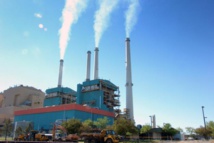
The U.S Supreme court blocked Obama’s Clean Energy Initiatives because the EPA had not factored in the cost to comply with such directives.     <div style="position:relative; float:left; padding-right: 1ex;">
      <img src="https://www.wmaker.net/thestrategist/photo/art/default/7972102-12398995.jpg?v=1435752756" alt="U.S Supreme Court Block Obama’s Clean Energy Initiatives because of costs constrains" title="U.S Supreme Court Block Obama’s Clean Energy Initiatives because of costs constrains" />
     </div>
     <div>
      Five months before the UN led climate change summit which is to be held later in Paris this year, the U.S Supreme Court blocked President Obama’s clean energy initiative plans. Barack Obama’s clean energy initiative wanted to cap emissions of toxic pollutants and mercury from coal-fired power plants. <br />  &nbsp; <br />  &nbsp; <br />  In a decision that was sharply divided, the U.S Supreme Court, pronounced that the Environmental Protection Agency (EPA) had not factored in the high costs it take to comply with its directives. The decision to block the clean energy initiative was five is to four. <br />  &nbsp; <br />  &nbsp; <br />  The new rules created by the EPA to safeguard the environment was challenged by 21 Republican states and by industry groups who are operating old power plants. <br />  &nbsp; <br />  “One would not say that it is even rational, never mind ‘appropriate,’ to impose billions of dollars in economic costs in return for a few dollars in health or environmental benefits,” said Justice Antonin Scalia said from the bench. He went on to add, “No regulation is ‘appropriate’ if it does significantly more harm than good.” <br />  &nbsp; <br />  &nbsp; <br />  The U.S Congress has since long tried to thwart Obama’s climate change initiatives, which Barack Obama countered by offering dozens of regulatory targets and tweaks so that co2 emissions could be cut and his administration’s clean energy initiatives could be implemented irrespective of Congressional approval. <br />  &nbsp; <br />  &nbsp; <br />  If the Obama’s clean energy initiatives were to see the light of the day, by 2020, greenhouse gas emissions would come down to levels below that of 2005. Although three years back, Barack Obama had set this goal, but since Congress did not frame policies which would allow for such a decrease, the goals were unmet. <br />  &nbsp; <br />  &nbsp; <br />  As one would expect, the whole idea was to take a serious look and crackdown on major existing carbon spewing power plants. New power plants would have to meet energy efficient standards. Power plants in the U.S are responsible for almost 40% of greenhouse gasses. <br />  &nbsp; <br />  &nbsp; <br />  “We limit the amount of toxic chemicals like mercury and sulphur and arsenic in our air or our water, but power plants can still dump unlimited amounts of carbon pollution into the air for free. That’s not right, that’s not safe, and it needs to stop,” had said President Barack Obama. <br />  &nbsp; <br />  &nbsp; <br />  So as to implement his vision and meet energy efficient standards, Barack Obama depended on the EPA to enforce regulations under a regulation known as the Clean Air Act. <br />  &nbsp; <br />  &nbsp; <br />  This Supreme Court’s ruling is not final: the final decision as to whether Barack Obama’s clean energy initiative will see the light of day depends now on the DC Circuit Court, which has been instructed to consider the same taking costs into account, at least in the initial stage. <br />  &nbsp; <br />  Although many power plants in the U.S implement technologies that curb the release of greenhouse gases, the Clean Air Act, targets those who do not process their emissions and spew toxics pollutants into the air. Essentially around 600 mostly coal powered power plants are affected. <br />  &nbsp; <br />  “The Court has sided with the Dirty Delinquents &nbsp;– the small percentage of coal-fired plants that haven’t cleaned up – and against the majority that are already protecting our children from mercury and other toxic pollutants,” said Fred Krupp, President of the Environmental Defense Fund. <br />  &nbsp; <br />  He continued by adding, “It’s critically important for our nation that these life-saving protections remain in place while EPA responds to the Court’s decision, and EDF will focus its efforts on ensuring these safeguards are intact.” <br />  &nbsp; <br />  &nbsp; <br />  Neil Gormley, a senior Associate Attorney with Earthjustice, whose grou had filed a brief supporting EPA’s stand, reacted to the court’s ruling saying, “ [it] doesn’t change EPA’s authority to protect the public from toxic air pollution. It just gives the agency another hoop to jump through. Now EPA should act quickly to finalise these crucial health protections.” <br />  &nbsp; <br />  <strong>References:</strong> <br />  <strong><a class="link" href="http://www.ipsnews.net/2015/06/u-s-supreme-court-deals-blow-to-obamas-emissions-cuts/">http://www.ipsnews.net/2015/06/u-s-supreme-court-deals-blow-to-obamas-emissions-cuts/</a>  </strong>
     </div>
     <br style="clear:both;"/>
    ]]>
   </content>
   <link rel="alternate" href="https://www.wmaker.net/thestrategist/U-S-Supreme-Court-Block-Obama-s-Clean-Energy-Initiatives-because-of-costs-constrains_a678.html" />
  </entry>
  <entry>
   <title>Water Issues in Asia : An Interview With Jean-Philippe Filhol, Veolia Water Technologies</title>
   <updated>2015-05-22T16:54:00+02:00</updated>
   <id>https://www.wmaker.net/thestrategist/Water-Issues-in-Asia-An-Interview-With-Jean-Philippe-Filhol-Veolia-Water-Technologies_a478.html</id>
   <category term="Companies &amp; CEOs" />
   <photo:imgsrc>https://www.wmaker.net/thestrategist/photo/art/imagette/7820678-12128664.jpg</photo:imgsrc>
   <published>2015-05-22T16:39:00+02:00</published>
   <author><name>La Rédaction</name></author>
   <content type="html">
    <![CDATA[
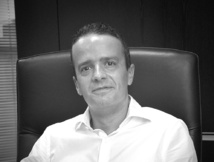
For decades, Asia has served as a factory for the rest of the world. However, the offshoring of production to that part of the world has resulted in the displacement of a number of environmental issues, starting with those caused by industrial scale production. In an interview, Jean-Philippe Filhol, Regional Director Asia Veolia Water Technologies for industrial markets, provides further insight on this topic.     <div><b>Are environmental concerns echoed throughout Asian cultures? How are these issues apprehended locally?</b></div>
     <div style="position:relative; float:right; padding-left: 1ex;">
      <img src="https://www.wmaker.net/thestrategist/photo/art/default/7820678-12128664.jpg?v=1432306139" alt="Water Issues in Asia : An Interview With Jean-Philippe Filhol, Veolia Water Technologies" title="Water Issues in Asia : An Interview With Jean-Philippe Filhol, Veolia Water Technologies" />
     </div>
     <div>
      The vast majority of Asian countries officially put environmental concerns at the top of their agendas, but locally, there are still many disparities between countries like China, where standards are often more strict than those in the United States or Europe, as well as some countries that do not truly consider the environmental issues. <br />  &nbsp; <br />  For example, in 2008 the Philippines designed an environmental legislative framework, and yet it has still not been implemented. This lack of responsiveness impacts key industry players, such as Veolia Water Technology, which offers solutions that are adapted to the new versions of these laws. We thought about getting involved with the Philippines’ efforts to put their framework to action, but it’s been seven years and we still have not had the opportunity to implement our technologies. <br />  &nbsp; <br />  This delay can be attributed to the probability produced by single farms, as well as corruption in that part of the world.&nbsp;
     </div>
     <br style="clear:both;"/>
     <div><b>We all have China in mind when it comes to this issue, but is there a widespread pollution problem in Asia? If so, what is the source of this pollution that comes to mind?</b></div>
     <div>
      Industrial pollution is a problem all Asian countries face, including pollution from heavy industries, such as petroleum refining, the production of chemicals or electricity by coal plants. These industries are booming, particularly in India and China, to support the development of national infrastructure. <br />  &nbsp; <br />  We must understand that in this region, pollution is often seen as a necessary evil to industrial development. The economic development of Asian countries rely on these industries, which happen to have a real economic impact. The definition of new environmental regulations represents a major challenge for the countries, as they have an impact on their competitiveness in the global market. China must find a way to comply with international standards, while maintaining the competitiveness of their local businesses. <br />  &nbsp; <br />  China should also take into account the pollution caused by the manufacturing sector that involves many foreign companies. These businesses relocate to Asia because of its flexible legislation and savings benefits from the manufacturing process. Thus, the problem of pollution is closely linked to a low-cost manufacturing model, which could be jeopardized if countries were applying environmental standards comparable to those existing in so-called developed countries.
     </div>
     <br style="clear:both;"/>
     <div><b>When it comes to water pollution issues, such as those from fluoride, ammonia or heavy metals, where is Asia in terms of issuing laws to protect against this? Are governments responsive and proactive to environmental issues?</b></div>
     <div>
      Water pollution is a major issue in Asia, especially in industrial areas where many pollutants are produced. Treating waste, according to relevant standards, is a priority to preserve precious water resources. This is far from being the case everywhere. In Burma, for example, certain industries, not just local businesses, but the global players as well, discard their waste without treating it directly, consequently negatively impacting the quality of rivers and groundwater. These practices pose serious problems for the environment, as well as public health. <br />  &nbsp; <br />  This has led some countries to respond to regulations, including Taiwan, where the largest companies in microelectronics that use many toxic products throughout the production chain are based. Taiwan has recently strengthened its legislation for the maximum amount of ammonia contained in the waste and discharged by industries. This will position Taiwan as a responsive and active country on environmental issues. The country must comply with international regulations and contribute to the development of its industry leaders.
     </div>
     <br style="clear:both;"/>
     <div><b>How are these regulations accepted and implemented by the companies concerned? </b></div>
     <div>
      Some companies are not always willing to push the acceptance of environmental standards because they fear it will impact their competitiveness. These businesses are reluctant to spend their money on adapting to such regulations, especially when their competitors are sometimes not subject to the same restrictions. <br />  &nbsp; <br />  But times change, particularly with large Asian companies working with international players, whose regulatory requirements are strongly based around environmental issues. <br />  &nbsp; <br />  Other companies truly play a leading role when it comes to these issues. TSMC, the largest semiconductor foundry in the world based in Taiwan, is known to integrate environmental issues into its production process. As part of the adoption of the new regulations on ammonia, we have worked to develop a solution that integrates these regulations. It's an exciting challenge because we have to be creative so that our technical solution minimizes production costs or provides a positive return on investment for the company. This basically creates new value expectation for the environment and industry. <br />  &nbsp; <br />  If Asian industry leaders, such as TSMC, have the intelligence to adopt these innovative technologies, we can expect a ripple effect that will inevitably impact the environment and economy in a positive way.
     </div>
     <br style="clear:both;"/>
     <div><b>Asia is the leader in consumer electronics goods production. How do regulators try to limit the ecological footprint of this industry?</b></div>
     <div>
      In Taiwan and Singapore in particular, there is one industry that is focused on the recovery of waste from the production of electronic goods. There are also solutions to reuse the water in the manufacturing process itself, or parallel rings (irrigation, cleaning etc.). To be developed intelligently, these solutions require working far upstream to better understand their manufacturing processes, the quantities of water used and the degree of purity required at each stage. <br />  &nbsp; <br />  This comprehensive approach has enabled us to integrate our own technology, AnitaMox, the processing chain of waste that contains ammonia, which we hope to offer our Taiwanese partners. The whole point of this technology is its low Veolia environmental footprint. It not only leads to a very low chemical consumption, but overall has extremely moderate operating costs, making it both an ecological and competitive solution.
     </div>
     <br style="clear:both;"/>
     <div><b>Are we witnessing the emergence of a comprehensive approach to water treatment issues in Asia, or is it still siloed approaches imposed by forced legislation?</b></div>
     <div>
      To be truly effective, this comprehensive approach needs to enter the manufacturing process of our industrial partners. This is a sensitive approach because companies operate in a very competitive environment and they worry that that another company can understand their strategic and confidential advantages in detail. Therefore this overall approach is necessary in order to propose sustainable solutions without threatening the competitiveness of our competitors. <br />  &nbsp; <br />  In addition, regulations are advancing environmental issues in the industry, especially in the more traditional sectors, which sometimes struggle to reform and evolve new less-polluting practices. For instance, the industry producing palm oil in Malaysia and Indonesia suffers from a poor public image for many reasons. What is needed is a comprehensive approach that involves a constructive dialogue with the organizations, setting the regulations to offer solutions that do not have additional costs, but rather turn into another source of income. We now know how to retrofit releases by creating energy with the generated biogas and produce electricity in a stable and controlled manner. To initiate a comprehensive approach, it is understood that regulations can also help to develop an entire economy.
     </div>
     <br style="clear:both;"/>
     <div><b>As a French leader collaborating with Asian companies, how do you approach your relationships with Asian businesses from a cultural point of view?</b></div>
     <div>
      Industrial activity in Asia is marked by strong competitiveness, prompting businesses to think through how to get the purchase price as low as possible. Unfortunately many industries still favor short-term solutions and adopt less expensive ones, but are more demanding in terms of operation and sometimes less effective in terms of pollution. <br />  &nbsp; <br />  Thus, a large part of our mission is to demonstrate to policymakers the benefits in the long term and carefully consider all factors that will lead to a rational decision in favor of a comprehensive and lasting solution. <br />  &nbsp; <br />  It is a long process, having to overcome skepticism, while needing to continue to move forward at a fast pace. This implies proposing innovative solutions, offering a real guarantee of results and engaging in operating contracts, in which we do not hesitate to ensure the competitiveness and performance of our solutions. This is proof of our commitment to our Asian partners, to be at their side in the long term, to support their growth and respect the environment. <br />  &nbsp; <br />  By adopting an approach "lead by example," we work with leaders in highly competitive sectors. We start from the simple premise that if these major companies, adopt our solutions, this is proof alone of their power and effectiveness! <br />  &nbsp; <br />  We are now reaping the benefits of more than a thirty-year commitment in Asia. Manufacturers are beginning to understand that the cheapest solutions are rarely the answer and they often come back to us with different projects to find more sustainable solutions. This is good news for both the environment and Veolia, whose mission is to <em>"rejuvenate Asia and the World"</em> in partnership with the leaders of our industrial markets.
     </div>
     <br style="clear:both;"/>
    ]]>
   </content>
   <link rel="alternate" href="https://www.wmaker.net/thestrategist/Water-Issues-in-Asia-An-Interview-With-Jean-Philippe-Filhol-Veolia-Water-Technologies_a478.html" />
  </entry>
</feed>