<?xml version="1.0" encoding="UTF-8"?>
<feed xmlns="http://www.w3.org/2005/Atom"  xmlns:media="http://search.yahoo.com/mrss/" xmlns:dc="http://purl.org/dc/elements/1.1/" xmlns:itunes="http://www.itunes.com/dtds/podcast-1.0.dtd" xmlns:geo="http://www.w3.org/2003/01/geo/wgs84_pos#" xmlns:georss="http://www.georss.org/georss" xmlns:photo="http://www.pheed.com/pheed/">
 <title>The Strategist</title>
 <subtitle><![CDATA[Daily news and analysis for corporate &amp; political leaders]]></subtitle>
 <link rel="alternate" type="text/html" href="https://www.wmaker.net/thestrategist" />
 <link rel="self" type="text/xml" href="https://www.wmaker.net/thestrategist/xml/atom.xml" />
 <id>https://www.wmaker.net/thestrategist/</id>
 <updated>2026-11-25T14:00:47+01:00</updated>
 <generator uri="http://www.wmaker.net">Webzine Maker</generator>
  <icon>https://www.wmaker.net/thestrategist/favicon.ico</icon>
  <logo>https://www.wmaker.net/thestrategist/var/style/logo.jpg?v=1426090212</logo>
  <entry>
   <title>Drinkable water in Africa: the challenge taken up by Veolia Water Technologies</title>
   <updated>2018-09-13T11:30:00+02:00</updated>
   <id>https://www.wmaker.net/thestrategist/Drinkable-water-in-Africa-the-challenge-taken-up-by-Veolia-Water-Technologies_a3178.html</id>
   <category term="Markets &amp; Industries" />
   <photo:imgsrc>https://www.wmaker.net/thestrategist/photo/art/imagette/25457956-26725542.jpg</photo:imgsrc>
   <published>2018-09-07T18:24:00+02:00</published>
   <author><name>La Rédaction</name></author>
   <content type="html">
    <![CDATA[
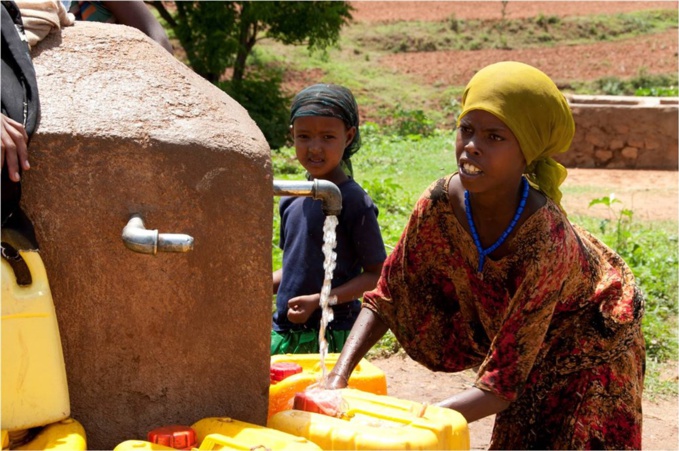
In Africa 320 million people still do not have access to drinkable water that meets the basic hygiene standards. The filtering of used water is an issue as well since 80% of it is simply rejected into the wild and pollutes the environment. Veolia Water Technologies (VWT), a subsidiary company of the French multinational and present in 77 countries, specializes in the services and the filtering of the water. Its new Director for Development in Africa, Sébastien Gary describes for us the many challenges that await VWT in this part of the world.     <div style="position:relative; text-align : center; padding-bottom: 1em;">
      <img src="https://www.wmaker.net/thestrategist/photo/art/default/25457956-26725542.jpg?v=1536831758" alt="Drinkable water in Africa: the challenge taken up by Veolia Water Technologies" title="Drinkable water in Africa: the challenge taken up by Veolia Water Technologies" />
     </div>
     <div>
      <strong>You have just been nominated Director of the African development of Veolia Water Technologies, what are your long-term goals?</strong> <br />  &nbsp; <br />  It is difficult to answer that question because Africa, and especially the sub-Sahara region, is facing a situation without precedent. The continent is facing demographic issues and a very fast urbanization. Indeed, the population shift from countries to countries within Africa and to occidental, countries makes it difficult to know what our long-term goals should be. Of course, the goal is to give access to drinking water to everyone continuously during the year and during the day. We also must ensure that the resources are still available after a few years. <br />   <br />  It is easy to dig dwells and give access to drinking water, but we cannot be sure that the dwells will operate for fifteen years. First, water will eventually become scarce, and second waste water will be produced and will need to be treated. <br />  If you look at the Senegal river or Niger river for example, the existing water plants are already at the limit because waste water is not treated. Our main goal is to provide the African continent with drinking water and new solutions regarding the waste water management, so the population will always have access to good quality water. <br />  &nbsp; <br />  <strong>For a long time, you have been managing the services as well as the filtering of the water.&nbsp; Water is not a usual product. What are the specifications of such an activity in Africa?</strong> <br />  &nbsp; <br />  A common mistake is to think that there is a scarcity of water. The truth is that there is a scarcity of drinking water. Most Africans have access to water and when we witness children dying because of the water, it is because it is not good quality water. Providing water for large cities is also very difficult. The production itself is not that challenging but the first difficulty is to find financing. Then you need to operate and maintain the water plants which is not easy. I am not talking only about Veolia; the states also have a hard time maintaining the treatment plants. There is a lot of dwells that are being dug and do not operate after a few years. <br />   <br />  The quality of the networks is another issue. In Africa we are facing a very fast urbanization and the cities are growing horizontally and it is very difficult to define what is the exact population of large cities. This growth is not accompanied by the development of the water and electricity networks. For electricity there are solutions like the solar panels or the wind turbines, for water it is more complicated. <br />  &nbsp; <br />  <strong>Water contains a major geopolitical importance and it is common to talk about the “water war”, how do you define your activity at the heart of these issues?</strong> <br />  &nbsp; <br />  Water is a common good and at Veolia we want to be a factor of peace and security in this matter, but it is a delicate one. Let us take the example of the Senegal river: it runs through Guinea, Mali and Senegal. If there are too many water plants in Guinea and Mali, it might be hard to have enough water for Dakar. Another example is Cape town in South Africa: we have been through a three years drought. And now what they call “day zero” is coming when there will not be any running water in the city. With these examples I want to point out that when hear of “water war” we think of wars between countries. But the truth is that it exists within the countries, between cities and regions. <br />   <br />  As a multinational company, our role is to provide water to anyone anywhere. In a region where the population is growing, the lack of water would have catastrophic consequences. There would not be any jobs because without water you cannot have any industry, tourism or agriculture. The populations would have to move and there would be revolts. The climate change is a factor as well that just speeds up the process. <br />  &nbsp; <br />  <strong>Are there differences of challenges between each country? Shortage, managing water reserves, water waste caused by obsolete networks?</strong> <br />  &nbsp; <br />  I sometimes hear companies saying they want to be Burkinabe in Burkina Faso, Kenyan in Kenya etc., but I do not think this is the point. Yes, there are differences between countries and there are very large discrepancies between the networks for drinking water and waste water in Dakar and Mombasa for example. At Veolia we adapt to the local specificities, but we are French and a global company. We have solutions, technologies and capacities to understand the needs of anywhere we go. The answer must be local, so we study the situation and adapt. If there is a river nearby or if the coast is close, the network will be different. Even in the same country the situations can be quite different. Also, depending on the country, there may be grants or financing from a global organization and this has an impact on how we can do our job. <br />  &nbsp; <br />  <strong>What are the other impacts that an efficient water management can have on the development of a country?</strong> <br />  &nbsp; <br />  Air, water and food are the basic human needs. For air there is not a lot we can do except fight against pollution. As far as food is concerned, I personally have tried to come up with very simple concepts to develop local farming. It always comes down to the same issues: the infrastructures are poor, and you cannot keep fruits and vegetables in a cold storage because of the lack of electricity. The cost would be so high that it would be impossible to sell the products on the market. The idea is to use very simple techniques to grow fruits and vegetables all year long in a cool greenhouse. This way, with a very low investment, we can have an impact on a very large number of families. These cultivation poles allow the population to be fixed and not be forced to move. Water provides food and from there you have the beginning of an ecosystem that will enable more and more businesses to develop around it. <br />   <br />  Water has an impact on the industrial sector as well. There is a lot of small to medium size industries that are developing in Africa and they need water to operate. These industries also need to treat their waste water and at Veolia we can help them do that. By doing so, and with the use of our technology, we take part of the water management in Africa. It is an environment requirement and it is always difficult for a government to develop the industry and to abide by these standards. But I truly believe this can be a win-win for the country if the constraints are the same for everyone, starting with the industrial sector.
     </div>
     <br style="clear:both;"/>
    ]]>
   </content>
   <link rel="alternate" href="https://www.wmaker.net/thestrategist/Drinkable-water-in-Africa-the-challenge-taken-up-by-Veolia-Water-Technologies_a3178.html" />
  </entry>
  <entry>
   <title>Oberthur Fiduciaire: there’s a lot more to a security printing company than meets the eye…</title>
   <updated>2016-05-13T09:20:00+02:00</updated>
   <id>https://www.wmaker.net/thestrategist/oberthur-fiduciaire-banknote-printing-fiduciary/</id>
   <category term="Markets &amp; Industries" />
   <photo:imgsrc>https://www.wmaker.net/thestrategist/photo/art/imagette/9469992-15196463.jpg</photo:imgsrc>
   <published>2016-05-07T19:38:00+02:00</published>
   <author><name>La Rédaction</name></author>
   <content type="html">
    <![CDATA[
Founded in 1842, French security printer Oberthur Fiduciaire has become a trusted partner to 70 central banks worldwide. We met Thomas Savare, the CEO of the company, for an interview.     <div style="position:relative; text-align : center; padding-bottom: 1em;">
      <img src="https://www.wmaker.net/thestrategist/photo/art/default/9469992-15196463.jpg?v=1463123584" alt="Oberthur Fiduciaire: there’s a lot more to a security printing company than meets the eye…" title="Oberthur Fiduciaire: there’s a lot more to a security printing company than meets the eye…" />
     </div>
     <div>
      
     </div>
     <br style="clear:both;"/>
     <div><b>Here at Oberthur Fiduciaire you are doing a fascinating job; printing banknotes for 70-80 central banks across the world. How does a national bank choose a printing company? What are the criteria and the specifications?</b></div>
     <div>
      There are few companies that are qualified to print banknotes and have the right security to be able to offer that to central banks. The criteria to choose a supplier is obviously based on the technical ability, the experience and security, and then, of course price comes into play. The purchasing processes are becoming more and more professional. Now, there are tenders with pre-qualifications for example.
     </div>
     <br style="clear:both;"/>
     <div><b>Your company has been knowledgeable in this sector since 1842.  How did the printing industry evolve since then?  How has it changed the profile of your collaborators? </b></div>
     <div>
      The technology has obviously changed, even though one of the main technologies used since the very beginning is still used today – intaglio printing, used almost exclusively in this industry for printing banknotes. But there are many different techniques that have been adopted more recently, such as varnishing, which emerged maybe 10 -15 years ago. Today, printing a banknote is a multi-step process, you can have as much as 8 or 9 different processes and many different machines that come into play for producing banknotes, which has made the entire process all the more complicated.&nbsp;Of course, the qualifications of our employees has changed along with that evolution. Today, many printing skills, finishing skills and design skills are needed, besides growing R&amp;D activities, all which develop new security features to adapt new techniques and new processes, to enhance the security and the durability of banknotes. These are some of the main concerns of the central banks we work with.&nbsp;
     </div>
     <br style="clear:both;"/>
     <div><b>How has the technological evolution of the job affected the business strategies of Oberthur Fiduciaire?</b></div>
     <div>
      There has been an evolution in the printing techniques themselves, which has had an impact on the day-to-day. With all of the security features that are incorporated into the printing process, such as holograms or threads, there are many different kinds of security elements incorporated into the banknotes.&nbsp;We are a printing company. So when it comes to strategy, we have to master the printing techniques themselves, but we also have to master the job of integrating different technologies, different substrates and different security features. We have to do that within an environment that is highly industrial, because we’re supplying billions of individuals with products that are numbered and personalized. And these products need to be so secure that forgery would be impossible, with the resistance needed to last the day-to-day use of a banknote.&nbsp;
     </div>
     <br style="clear:both;"/>
     <div><b>What are the components of a banknote, and is that specific to fiduciary printing?</b></div>
     <div>
      Part of the security of our business comes from the supply chain, which is unique to the industry. Banknote paper is very specific one, only used for banknotes, and manufactured by extremely niche suppliers who will only sell to recognized banknote printers (state printers or private printers). The same goes for the ink, which is made exclusively for banknote printing. The ink is resistant and has integrated security features, to be long lasting.&nbsp;You won’t find these requirements anywhere else in the printing industry. It’s very unique – from the holograms designed for banknotes to the threads specifically designed to be incorporated in the banknote paper.&nbsp; The entire supply chain is dedicated to this industry and that’s a large part of the security of a banknote.&nbsp;
     </div>
     <br style="clear:both;"/>
     <div><b>Why are the designs and the esthetics so important to the overall process?</b></div>
     <div>
      The design is essential because it’s a matter of security and conveys the image of a country. We incorporate the security features into the design. But there is also an artistic part to it. You have to be able to understand the history and the symbols of a country to create attractive designs tailored to the specific culture. That is what makes the design of each banknote very interesting.
     </div>
     <br style="clear:both;"/>
     <div><b>Can you explain how Oberthur Fiduciaire integrates the securities and technological crucial points to prevent forgery?</b></div>
     <div>
      Obviously I can’t go into too much detail into the secure technologies that we use, but there can’t be only one security feature that prevents counterfeiting. For us, we use a collection of different barriers to fight potential forgers. There are a lot of technologies used to make the paper itself, the threads, the fibers, the printing techniques… It’s a very thorough combination of different security features. And our business is evolving constantly because we have to introduce new security features on an ongoing basis.&nbsp;
     </div>
     <br style="clear:both;"/>
     <div><b>You recently created a joint-venture out of Bulgaria for banknote production. Are new markets in emerging countries an opportunity for you to grow?</b></div>
     <div>
      Definitely yes! But that is separate from our joint venture in Bulgaria. We operate in both developed countries and emerging countries. It’s been like this since the beginning. We are now addressing the market from our two plants in France and Bulgaria. We have the exact same standards in terms of quality, security, knowhow and capabilities from those two plants. The clients who choose Oberthur Fiduciaire as a supplier know that they will get the exact same quality whether banknotes are printed in France or in Bulgaria.&nbsp;
     </div>
     <br style="clear:both;"/>
     <div><b>Will banknotes survive the rise of online payments?</b></div>
     <div>
      I think there are a lot of preconceived ideas about that. I can’t predict whether or not banknotes will have disappeared in two hundred years. There is competition between print payments and the evolving electronic methods today. But we actually just completed a thorough statistical analysis in developed countries. Interestingly enough, we have found that usage of banknotes has consistently increased over the last fifteen years, between 50% and 100%.&nbsp;While I can’t see future, the volume of printed banknotes is growing faster than GDPs. That might come as a shock considering the rise in electronic payments, but the reality is that cash is still king and growing in developed economies… and even faster in emerging economies.
     </div>
     <br style="clear:both;"/>
    ]]>
   </content>
   <link rel="alternate" href="https://www.wmaker.net/thestrategist/oberthur-fiduciaire-banknote-printing-fiduciary/" />
  </entry>
  <entry>
   <title>Flexibility, the Next Big Thing For Modern Armament</title>
   <updated>2015-08-04T18:10:00+02:00</updated>
   <id>https://www.wmaker.net/thestrategist/Flexibility-the-Next-Big-Thing-For-Modern-Armament_a804.html</id>
   <category term="Management &amp; Strategy" />
   <photo:imgsrc>https://www.wmaker.net/thestrategist/photo/art/imagette/8103014-12634429.jpg</photo:imgsrc>
   <published>2015-08-04T17:58:00+02:00</published>
   <author><name>La Rédaction</name></author>
   <content type="html">
    <![CDATA[
The twentieth century has been rich in shifts. When an army’s job was to defeat the opponent, barely a century ago, the number of missions which befall armed forces today has quickly gone from 2 to 4. To defensive and offensive missions, governments have added stability and support operations. This change goes beyond training: it requires for equipment and vehicles to be completely re-thought. And flexibility became a crucial requirement, especially for European countries, where Defence spending is actually falling.     <div style="position:relative; float:right; padding-left: 1ex;">
      <img src="https://www.wmaker.net/thestrategist/photo/art/default/8103014-12634429.jpg?v=1438704566" alt="Flexibility, the Next Big Thing For Modern Armament" title="Flexibility, the Next Big Thing For Modern Armament" />
     </div>
     <div>
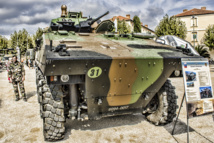
      Beyond purely military missions – war, said bluntly – are <a class="link" href="http://www.un.org/en/peacekeeping/operations/current.shtml">PKOs</a>  (Peace Keeping Operations) under UN leadership. These missions are subdivided into 15 different sub-missions, namely military, police, rule of law, civil affairs, electoral assistance, Security sector reform, mine action, disarmament, etc. Missions must be discriminated, between peace-keeping and peace-enforcing operations. In the former case, the military are in charge of maintaining fragile peace, which requires presence and monitoring, but almost excludes any use of force. In the latter situation, force will be used, but in the most limited and carefully calibrated way. In these missions, the goal is to invert escalation: every use of force must lead to a reduction of violence in the following days. In both these cases, intimidation is key: the antagonistic parties must be subdued with no violence. Scaling the appearance of the military deployment is therefore of the essence. This explains why the UN deploys military vehicles, with deadly cannons and roaring motors, but painted in virgin white and driven by soldiers with sky-blue helmets. <br />   <br />  But of course these missions have not replaced traditional military tasks, they have simply added to them. Armies must still be able to scale all the way up to all-out battles, should need be. All the subtle levels of visual intimidation and kinetic violence must be tunable. Now, though modern armies all understand that the next mission may be anywhere on that scale, it is of course out of the question to have an army for each mission. In recent years, modularity has therefore become a key factor in the way Defense Forces have chosen their equipment. Three examples come to mind: <br />   <br />  The <a class="link" href="http://www.airforce-technology.com/projects/aw101-helicopter/">AgustaWestland AW 101</a>  helicopter, also called the British Merlin, has been in service in the British armed forces over the past 15 years. It has proven reliable and, most of all, able to take a very wide array of missions, from transport, to area control, and from medical evacuations to commando movements. The helicopter has been modified and declined in 35 different configurations. It has been used for area control using the Honeywell <a class="link" href="http://www.l-3mps.com/oceansystems/helras_ds-100.aspx">HELRAS</a>  dipping sonar and the Eliradar, enabling it to monitor surface, underwater and air activity all at once. The 410 model was able to deploy folding rotors for storage on aircraft carriers. The rear loading ramp enables lading the chopper with goods for rapid humanitarian relief or quick military replenishment. Advanced avionics make it fit for Special Forces operations. It has also been used by many armies as a rescue chopper, with a large side bay door, enabling lying-down embarking. Along with naval anti-mine activity, it has been used for every possible mission, except pure combat missions, which are still the reserved playground for combat choppers. <br />   <br />  The Franco-Italian <a class="link" href="http://www.naval-technology.com/projects/fremm/">FREMM frigate</a>  is a particularly modern, and therefore telling, illustration. The weapons program was shared between France and Italy (17 models for France, 10 for Italy). Although the vessel is a warship, it is able to perform a very wide array of missions, beyond traditional military ones. With a large sea-to-land interface, and a powerful SPY-1 or Herakles radar, it can lead amphibious missions but also quickly deploy humanitarian means. With its new generation radar, it can just as well intercept enemy navies as it can monitor illegal immigration (or narcotics) fast boats, something Italy <a class="link" href="http://www.theguardian.com/world/2014/aug/15/italy-coalition-government-angelino-alfano-immigration-tension-mare-nostrum">is in dire need of</a>, as it is on the edge of Europe. And the advanced communication systems, it can coordinate or partake to logistics operations, be they military, civilian, humanitarian or security-based. The ship perfectly illustrates the dual necessity of military equipment: it will quite often be used for non-military missions, or security purposes, but must also be always able to perform pure combat missions against enemies of any size. <br />   <br />  But the flexibility requirement even applies within military missions. Any military equipment manufacturer knows this: you know what your piece of kit can do when it rolls out of the factory; but you never know what it will have to do, once it is on the battlefield. A simple infantry vehicle can become a command car, if necessity dictates. Just as a reconnaissance vehicle will be used for combat, if nothing else is at hand. In addition, modern armies have considerably raised awareness of the necessity to optimize use of military funds. Using the same vehicle in various configurations greatly facilitates maintenance and logistics, and therefore comes cheaper than specific maintenance lines for each vehicles. <br />   <br />  The French have fielded <a class="link" href="http://www.armyrecognition.com/weapons_defence_industry_military_technology_uk/nexter_systems_vbci_8x8_armoured_vehicle_ready_to_be_used_as_modular_platform_for_multi_mission_0903.html">the VBCI</a>, the <em>Vehicule blinde de combat d’infanterie</em>, in their infantry regiments. Two versions are currently available in French army: command post vehicle, fitted with .50 caliber remotely operated weapon, and Infantry Fighting vehicle armed with 25mm gun turret. VBCI is a modular platform that can be adapted to needs: all variants are designed to fit the same base frame and use the same spare parts, in order to reduce the logistical footprints. This supports overall efficiency at the brigade level, with light and flexible logistics, and ensuing speed and agility. The same heavily armored and highly mobile vehicle will be fitted with various modules and become ambulances, reconnaissance vehicles, anti-tank vectors, command cars, engineering platforms, etc. <br />   <br />  If the VBCI is basically designed to be an armored personal carrier, it could be armed with manned or unmanned high-power turrets, as a Nexter Systems 25mm gun turret, BMP3&nbsp;100mm turret in the case of the United Arab Emirates variants, or even the powerful CTA40 from CTA International. The <a class="link" href="https://www.youtube.com/watch?v=1fReEk4Ny14">CTA40</a>  was designed to provide IFV with the superior firepower of a medium caliber weapon, integrated in a smaller turret than usual. VBCI variants also include self-propelled mortar carrier, with a semi-automatic 120mm mortar mounted at the rear side of the vehicle and, able to provide heavy fire-support on short notice. The need for those variants reflects the fact that flexibility and modularity are expressly recognized as vital factors by armed forces. <br />   <br />  Many things have changed over the past 50 years, in Western armies. From conscription armies, where two enemy formations slammed into each other, we have moved to a more elaborate level, where making the best use of the means we have, and keeping as flexible as possible, as become the way to win the war, sometimes even before it started. When armies are too expensive to maintain and vehicles start falling apart, battles often don’t even need to be waged: the outcome is known beforehand.
     </div>
     <br style="clear:both;"/>
    ]]>
   </content>
   <link rel="alternate" href="https://www.wmaker.net/thestrategist/Flexibility-the-Next-Big-Thing-For-Modern-Armament_a804.html" />
  </entry>
</feed>